

Even though there’s some utility to having a home herbal cabinet, the costs can add up quickly if you purchase trendy mixes, repeat products, and large containers that you may not use completely. This article presents an economical, safe way to create an easily maintained herbal collection without breaking the bank.
Creating an herbal cabinet as part of your home can become costly if done as something more like a hobby rather than a household tool. There tends to be a familiar pattern to this type of herbal cabinet. For example, many people will create a sleep tincture and have an extra immunity gummy, detox tea, as well as a nice blend of oils, but those are not always available. Therefore, there are typically many bottles of products hidden in the back of a cabinet yet remain very useful for the person to use.
That smaller approach also fits the reality of the market. Most oral herbal products are sold as dietary supplements, not drugs. The FDA does not approve dietary supplements for safety and effectiveness before they are sold, and NCCIH notes that supplements can interact with medicines, create problems around surgery, and carry special risks in pregnancy, breastfeeding, and childhood. (fda.gov)
TL;DR
- Start with 3 to 4 repeat-use items, not a themed shelf of sleep, immunity, detox, and focus products.
- Use the FRESH filter before every purchase: Frequency, Risk, Evidence, Single ingredient, Half-container rule.
- Tea is usually the cheapest way to test whether an herb belongs in your routine. Tinctures, gummies, and multi-herb blends are where budgets usually drift.
- Read the Supplement Facts panel and check serving size, ingredient amounts, plant part, other ingredients, and company contact information. (fda.gov)
- Store products in a cool, dry place, away from bathroom humidity, and review the cabinet every 90 days. (medlineplus.gov)
Informational only, not medical advice. Talk with a clinician or pharmacist before using herbal products if you are pregnant, breastfeeding, giving them to a child, taking prescription medicine, have surgery coming up, or manage a chronic condition. If a product seems to cause a serious reaction, stop using it and seek medical care. (nccih.nih.gov)
Start by shrinking the mission
A money-wise herbal cabinet is not an alternative pharmacy in miniature, it is merely a short list of inexpensive herbal products which you actually use and will finish in their available forms with a storage system that prevents your duplication of those types of products. If a product is intended to treat a serious or recurring condition, it needs to be purchased as part of your medical conversations and should not be in your midnight impulse shopping cart.
The label is a starting point, not proof that a product is a smart buy. The FDA requires basic labeling elements on dietary supplements, including a Supplement Facts panel and company information, but the agency generally steps in after products are on the market rather than approving them beforehand. (fda.gov)
Use the FRESH filter before you buy anything
To reduce wasted spending on herbal products you should pass them through one simple check – the FRESH test – before you purchase them. If a product does not meet both criteria of this test it will not be stored in your cabinets at home.
- F – Frequency: Will you use it at least twice a month for the next three months?
- R – Risk: If you take medicines, have chronic conditions, are pregnant or breastfeeding, are buying for a child, or have surgery coming up, pause first. NCCIH flags herb-drug interaction concerns, and herbs such as St. John’s wort and goldenseal can materially change how medicines work. (nccih.nih.gov)
- E – Evidence: Choose items with either modest evidence for a narrow use or a clear food-and-tea role. Ginger has some evidence for certain kinds of nausea, while chamomile is generally safe in tea amounts but is not a proven insomnia fix. (nccih.nih.gov)
- S – Single ingredient: Your first version of a cabinet should make it obvious what helped and what did not. Multi-herb blends hide that.
- H – Half-container rule: If you cannot realistically picture yourself using half the bottle or box before you start wondering whether it is too old, leave it on the shelf.
| Filter | Pass test | Fail signal | Default decision |
|---|---|---|---|
| Frequency | You expect steady repeat use. | You are buying for a vague someday need. | Wait. |
| Risk | No medication, pregnancy, child-use, or surgery concerns, or you already cleared it with a clinician. (nccih.nih.gov) | You are guessing about interactions. | Do not buy yet. |
| Evidence | There is at least a sensible reason to test it in a low-cost form. (nccih.nih.gov) | The claim is broad, trendy, or cure-like. | Downgrade to tea or skip. |
| Single ingredient | You can tell what you are testing. | The label is a proprietary blend or a long ingredient stack. | Skip. |
| Half-container rule | You can finish half without forcing it. | You are buying the giant bottle for unit price only. | Buy the smaller size or none. |
A realistic $45 starter cabinet
Here is what waste usually looks like. A first cart comes to $187 before tax: elderberry gummies for $18, a sleep tincture for $29, detox tea for $16, turmeric gummies for $20, a mushroom blend for $34, an essential oil kit for $42, and an immune spray for $28. The buyer feels prepared, but there is no clear use plan, no interaction screen, and no reason to think half of it will be finished.
A leaner version of the same goal usually lands closer to $42 to $55, including the storage setup.
| Item | Estimated cost | Why it earns a spot | When to skip or wait |
|---|---|---|---|
| Ginger tea or a small bottle of ginger capsules | $6 to $14 | Reasonable first buy if occasional nausea is your actual use case and you want one targeted product instead of an immunity assortment. Ginger has been studied for nausea, though interactions are still possible. (nccih.nih.gov) | Wait if you take regular medicines and have not checked interactions, or if ginger worsens heartburn for you. (nccih.nih.gov) |
| Chamomile tea | $5 to $7 | Low-cost evening tea and easy to test without committing to extracts. Chamomile is likely safe in amounts commonly found in teas, but evidence for insomnia is limited. (nccih.nih.gov) | Wait if you have ragweed-type allergies, hormone-sensitive conditions, or medication questions. (nccih.nih.gov) |
| Peppermint tea | $4 to $7 | Cheap, familiar, and easy to stop if you do not use it. Peppermint tea appears safe, but strong health claims are a stretch; the better-studied form is specific peppermint oil capsules for IBS. (nccih.nih.gov) | Skip peppermint oil capsules as a first buy if you are only guessing. Peppermint oil can worsen indigestion in some people. (nccih.nih.gov) |
| Small storage bin and date label | $6 to $10 | Prevents duplicate buying and makes expiration reviews easier. | Do not skip the system and expect the cabinet to stay cheap. |
It is easy to follow this common sense guideline: Don’t purchase a second sleep aid or immunity mix or tincture until you’ve verified that the first one is ok enough to be placed on your shelf permanently. Most families can save more by waiting for the next purchase than by searching for a coupon code.
Choose the cheapest form that still gets used
| Form | Best first use | Main money trap | Default call |
|---|---|---|---|
| Tea bags | Testing whether you actually like and use the herb | Buying a fancy wellness blend instead of a plain single-herb tea | Best starter format |
| Loose dried herb by the ounce | For herbs you already use weekly | Buying too much because bulk looks cheaper | Good once use is proven |
| Single-ingredient capsules | When taste is the barrier and you need portability | Oversized bottles and duplicate ingredients across products | Useful second step |
| Tinctures | Only when you have a clear reason for that form | High bottle cost and low real-world follow-through | Usually wait |
| Gummies | Almost never the cheapest option | Paying extra for flavor, sugar, and candy-like packaging | Usually skip |
| Multi-herb blends | Rarely a smart first purchase | Hard to evaluate value, dose, and what is actually helping | Skip until you have a specific reason |
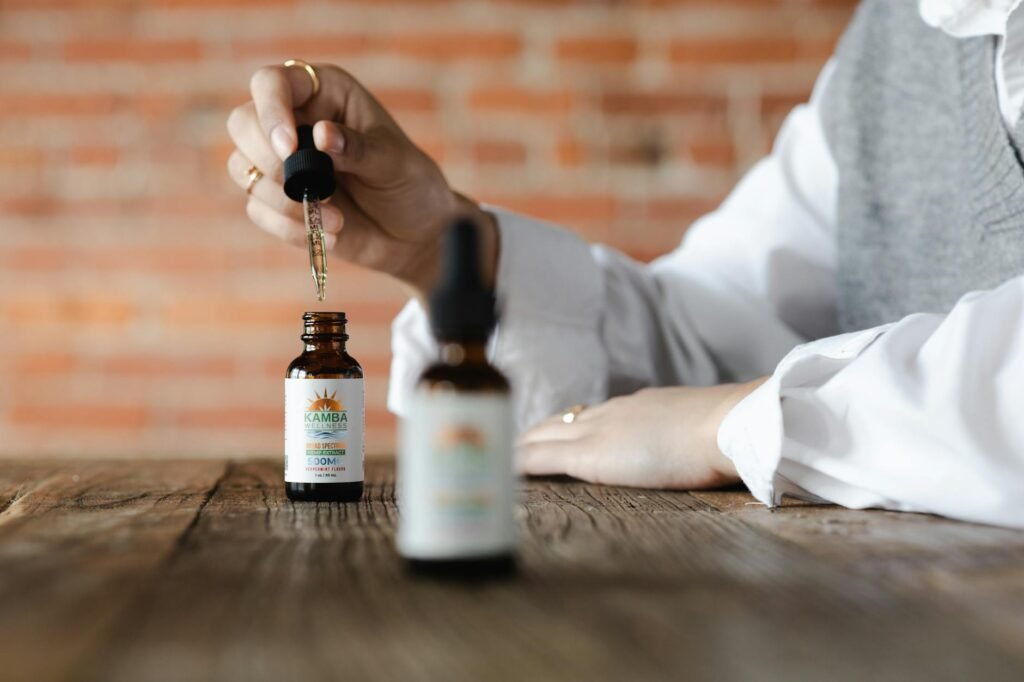
If a product is sold as a supplement, the label should answer boring questions clearly. The FDA says most supplement labels must include a Supplement Facts panel, serving size, servings per container, the amount of each dietary ingredient, an Other Ingredients list, and a domestic address or phone number for serious adverse-event reporting. The plant part may also matter for herbal products. (fda.gov)
- Check whether you can identify every active ingredient and explain why it is there.
- Check whether the serving size is realistic. FDA guidance says serving size reflects the maximum amount recommended on the label per eating occasion. (fda.gov)
- Look up the product in NIH’s Dietary Supplement Label Database if you want a cleaner view of what the label says. The database catalogs label information for supplement products sold in the United States. (ods.od.nih.gov)
- If available, favor independent verification. NCCIH points consumers to programs such as USP’s Dietary Supplement Verification Program as one way to check whether a product contains what is on the label and is less likely to be contaminated or adulterated. (nccih.nih.gov)
Where people waste the most money
- Buying by category bundle instead of solving one repeat-use problem. A cabinet full of sleep, focus, detox, and immunity products looks complete but usually behaves like clutter.
- Owning the same herb in tea, capsule, and tincture form at the same time.
- Treating natural as automatically low-risk. NCCIH notes that natural does not always mean safe, and some products sold as supplements have contained hidden or undeclared drug ingredients. (nccih.nih.gov)
- Using higher-risk herbs as casual experiments. St. John’s wort has many drug interactions, goldenseal can alter drug processing, kava has been linked to rare but serious liver injury, and valerian is not well supported for chronic insomnia and has unclear long-term safety. (nccih.nih.gov)
- Buying giant bottles to lower the unit price, then throwing half away later.
- Ignoring storage and expiration until the cabinet turns into a mystery box. (medlineplus.gov)
When tea and trial-size capsules are not the answer
If you are reaching for herbs every day for insomnia, anxiety, reflux, constipation, heavy periods, persistent pain, repeated nausea, or mood symptoms, the question is no longer which herb to add next. It is whether you are self-treating something that deserves a proper diagnosis. The FDA and NCCIH both stress that dietary supplements should not replace prescription medicines or professional care, and some supplements can interfere with treatment rather than complement it. (fda.gov)
The backup plan is not to keep escalating from tea to tincture to a multi-herb stack. A better next step is one of three things: ask a pharmacist about interactions, decide whether a standard OTC product may be more appropriate, or book a primary care visit for recurring symptoms. If a product seems to cause a serious reaction, stop using it and report it to the FDA through the Safety Reporting Portal. (fda.gov)
- Pregnant or breastfeeding: Get professional advice before stocking oral herbs. NCCIH notes that many supplements have not been adequately tested in these groups. (nccih.nih.gov)
- Kids in the house: Lock the cabinet and keep gummies out of sight and out of reach. Child-resistant caps are not enough on their own. (medlineplus.gov)
- If you use medicines with narrow therapeutic ranges: If you take medications such as warfarin, digoxin, or cyclosporine, tell your clinician about every supplement you use. (nccih.nih.gov)
Store it so it still works
Storage is a money issue because heat, air, light, and moisture can damage pills and capsules. MedlinePlus advises keeping medicines in a cool, dry place, not in a humid bathroom cabinet, and in their original containers. (medlineplus.gov)
- Use one shelf or one lidded bin in a cool, dry closet or kitchen area away from the stove and sink. (medlineplus.gov)
- Keep each product in its original container so the label, directions, lot number, and expiration date stay attached to the item. (medlineplus.gov)
- Write the open date on each box or bottle.
- Review the cabinet every 90 days. Read expiration dates, remove anything you no longer need, and dispose of expired products safely. Drug take-back programs are the best option when available. (medlineplus.gov)
- Keep everything out of sight and reach of children, and do not call vitamins or supplements candy. (medlineplus.gov)
How to pressure-test your cabinet before you restock
Before purchasing an item, conduct a 5 minute mini audit to find out where you can save money; the main focus should not be to create variety but rather to only leave things on your shelves that have proven to earn space on them.
- Pull every item out. If you forgot you owned it, it already failed the cabinet test.
- Check the label against NIH’s Dietary Supplement Label Database if the product is a supplement. (ods.od.nih.gov)
- Check FDA recall and safety alert pages before you reorder, especially if you buy supplements online. (fda.gov)
- If an herb is new to you, read the relevant NCCIH Herbs at a Glance entry or the HerbList app summary before rebuying. NCCIH says HerbList offers research-based summaries on more than 50 popular herbs. (nccih.nih.gov)
- Track whether the item solved a real repeat-use need. If not, replace it with nothing for one month before testing something else.
Bottom line
The least expensive herbal cupboard does not necessarily contain the greatest variety of herbs. A cupboard that contains just a small selection of inexpensive, non-threatening herbs you know how to use properly. Essentially, you will start with a very limited number of herbs, test possible contraindications, purchase single-ingredient herbs only, and then determine through actual use whether or not to keep them.
FAQ
How many items should a beginner keep in a home herbal cabinet?
Usually 3 to 4 is enough. That is enough to cover real repeat-use items without creating duplicates, expiration problems, or a confusing mix of products.
Is tea usually cheaper than capsules?
For testing whether an herb belongs in your routine, yes. Tea is often the lowest-commitment format. Capsules make more sense when taste is the main barrier or portability matters more than cost.
Which herbs deserve extra caution before I stock them?
Be careful with herbs that have meaningful interaction or safety concerns. NCCIH highlights St. John’s wort for many drug interactions and goldenseal for changing drug processing. NCCIH also says kava has been linked to rare but serious liver injury, and valerian is not recommended for chronic insomnia, with long-term safety still unclear. (nccih.nih.gov)
How do I know whether a supplement label is good enough?
Look for the Supplement Facts panel, serving size, servings per container, exact ingredient amounts, Other Ingredients, and a domestic contact number or address. You can also cross-check the label in NIH’s Dietary Supplement Label Database and, when available, look for independent verification such as USP. (fda.gov)
Should I transfer herbs and capsules into matching glass jars?
For pills and capsules, usually no. MedlinePlus advises keeping products in their original containers and storing them in a cool, dry place rather than a humid bathroom cabinet. (medlineplus.gov)
What should I do if an herbal product causes a reaction?
Stop using it. If the reaction is serious, get medical care right away. FDA advises consumers to report serious reactions from dietary supplements through the Safety Reporting Portal. (fda.gov)
References
- FDA 101: Dietary Supplements – https://www.fda.gov/ForConsumers/ConsumerUpdates/ucm050803.htm
- Using Dietary Supplements Wisely – https://www.nccih.nih.gov/health/using-dietary-supplements-wisely
- Questions and Answers on Dietary Supplements – https://www.fda.gov/food/information-consumers-using-dietary-supplements/questions-and-answers-dietary-supplements?=___psv__p_49073235__t_w__r_google.com_
- Dietary Supplement Labeling Guide: Chapter IV. Nutrition Labeling – https://www.fda.gov/food/dietary-supplements-guidance-documents-regulatory-information/dietary-supplement-labeling-guide-chapter-iv-nutrition-labeling
- Dietary Supplement Label Database (NIH ODS) – https://ods.od.nih.gov/Research/Dietary_Supplement_Label_Database.aspx
- Recalls of Foods & Dietary Supplements – https://www.fda.gov/food/recalls-outbreaks-emergencies/recalls-foods-dietary-supplements
- How to Report a Problem with Dietary Supplements – https://www.fda.gov/food/dietary-supplements/how-report-problem-dietary-supplements
- Storing Your Medicines – https://medlineplus.gov/ency/patientinstructions/000534.htm
- Medicine Safety and Children – https://medlineplus.gov/ency/patientinstructions/000619.htm
- 6 Tips: How Herbs Can Interact With Medicines – https://www.nccih.nih.gov/health/tips/tips-how-herbs-can-interact-with-medicines
- Ginger: Usefulness and Safety – https://www.nccih.nih.gov/health/ginger?prioritize_promoted_p=0&pwsName=beautifulhealthyyou&return_url=%2Ftag%2Fshaklee%3Fp%3D4%26pwsName%3Dbeautifulhealthyyou&tags=shaklee&term=27&tribe_event_display=past&tribe_paged=1
- Chamomile: Usefulness and Safety – https://www.nccih.nih.gov/health/chamomile/ataglance.htm