

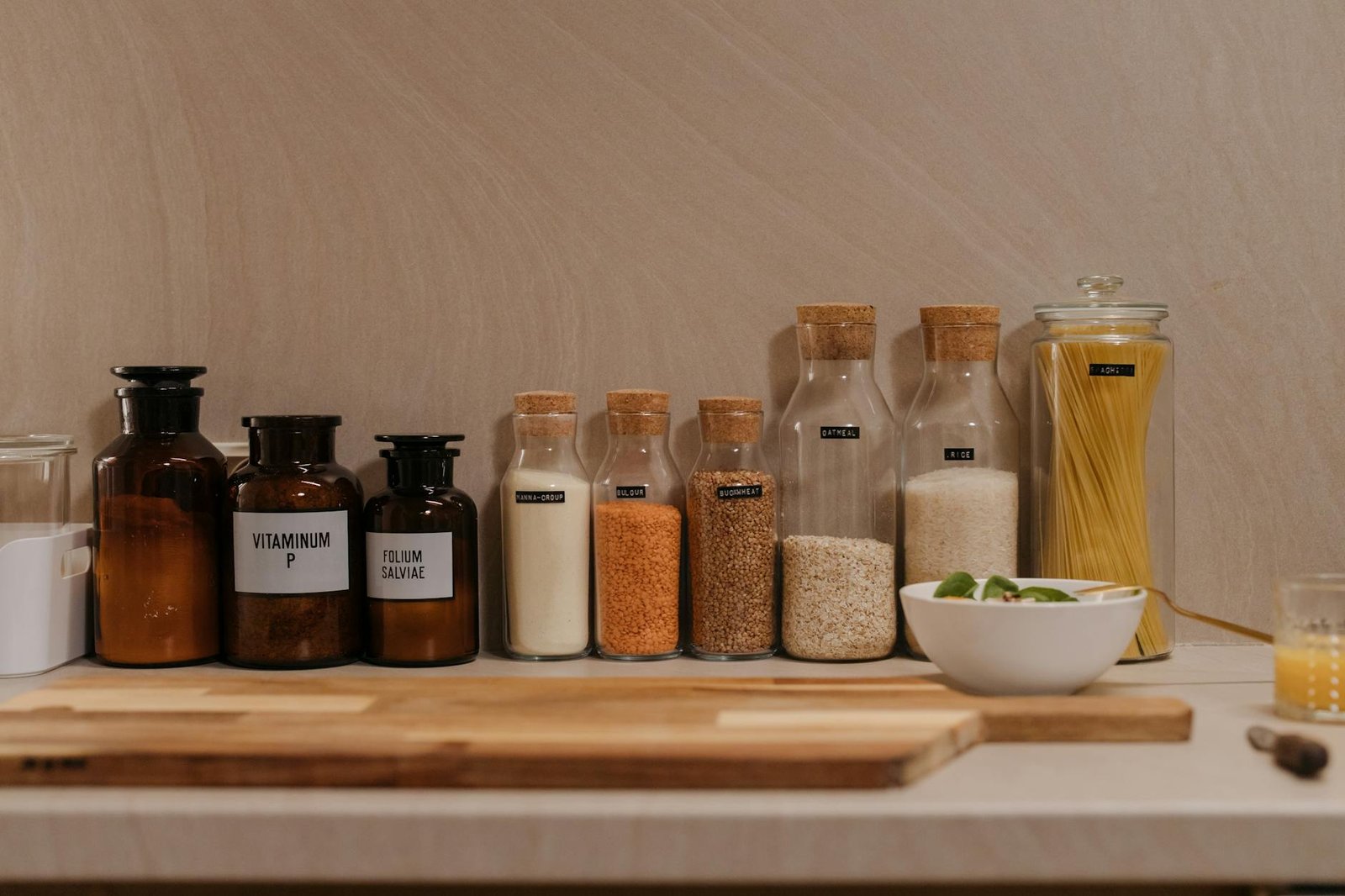
Buying herbs rarely prompts us to examine our budgets. For instance, we would not think to reconsider a couple bucks for a bunch of parsley and would hardly consider a couple dollars for a jar of dried thyme as a budget consideration. A box of loose chamomile would feel like an essential item in your pantry rather than a true budgeting consideration. Unfortunately, when herbs are not properly stored, they lose their flavor and have to be replaced sooner than expected. This results in bland food, early replacement of expired herbs and a continuous stream of waste from owning herbs we should have just tossed in the trash.
For dried herbs, the usual enemies are heat, light, air, and moisture. For fresh herbs, the trouble usually comes from excess water, warm storage, and treating every herb as if it needs the same setup. Extension guidance is fairly consistent on the basics: keep dried herbs airtight, cool, dark, and dry; keep most fresh herbs cold; and avoid washing them until you are ready to use them. (extension.psu.edu)
TL;DR
- Dried herbs last longer in airtight containers kept in a cool, dark, dry place, not near the stove, sink, or windowsill. (extension.psu.edu)
- Whole leaves usually hold flavor longer than crushed herbs, and large containers lose quality faster when they are reopened again and again. (extension.umn.edu)
- If home-dried herbs are sealed before they are fully cool and dry, they can sweat, clump, and even mold. (nchfp.uga.edu)
- Most fresh herbs should be washed right before use, not before storage. Parsley, dill, and cilantro like a lightly damp refrigerated setup, while basil is often stored stem-down in water. (extension.umn.edu)
- Use the AROMA Audit in this guide to decide what to keep, use soon, redry, or replace.
What “freshness” really means with herbs
With herbs, freshness is mostly about aroma and flavor oils, not just color. A jar can still look green and tidy but cook flat. Penn State notes that herb flavor comes from oils in the plant, and its pantry guidance recommends using aroma as a practical freshness test: if the characteristic smell has faded, it is time to replace the herb. (extension.psu.edu)
Scope note: This guide focuses on home-stored culinary herbs and loose dried herbs. Herb-infused oils are a separate food-safety issue and should be handled with tested guidance, not normal pantry rules. (extension.uga.edu)
Use the AROMA Audit before you reorganize anything
The fastest way to cut herb waste is to stop treating every half-full jar as equally usable. Use this AROMA Audit on every dried herb, tea blend, and home-dried bundle in your kitchen. Give each line 0 to 2 points. The scoring criteria are based on extension guidance about airtight storage, moisture control, cool dark placement, whole-versus-ground form, and aroma checks. (extension.psu.edu)
| Category | 2 points | 1 point | 0 points |
|---|---|---|---|
| Airtight container | Jar seals tightly; lid and rim are clean and dry. | Container closes, but it is oversized or frequently opened. | Loose bag clip, worn lid, torn pouch, or unsealed carton. |
| Residual moisture | No clumps, fogging, dampness, or soft stems. | Minor humidity issue, but no spoilage. | Condensation, damp texture, or mold. |
| Out of heat, light, and steam | Stored in an interior cabinet or drawer away from stove, sink, and window. | Stored on a counter away from direct sun. | Stored on an open rack near heat, steam, or sun. |
| Minimal surface area and openings | Whole leaves or seeds; small working jar. | Crushed herb or medium jar opened often. | Powdered herb in a large tub opened nightly. |
| Aroma test | Strong scent when rubbed between fingers. | Aroma is still there, but muted. | Flat, dusty, or barely noticeable smell. |
How to use the score: 8 to 10 points means keep it. 5 to 7 means fix the storage and use it soon. 0 to 4 means replace it, or redry and repackage only if the problem is moisture without spoilage. If you see mold, discard it. (nchfp.uga.edu)
The most common herbal storage mistakes
| Mistake | What it does to freshness | Likely budget effect | Better move |
|---|---|---|---|
| Keeping dried herbs above the stove | Heat, light, and steam fade aroma faster and can add moisture. | You use more per recipe and replace the jar sooner. | Move dried herbs to a closed cabinet away from heat and water. |
| Using a windowsill or decorative open rack | Sunlight and air exposure shorten quality life. | Half-full jars look fine but taste weak. | Store longer-term herbs in a cabinet, drawer, or opaque container. |
| Opening one giant refill bag every night | Repeated exposure to air and humidity lowers quality over time. | The back half of the bag is worse than the front half. | Keep a small working jar and a sealed backup. |
| Crushing or grinding the whole batch before storage | More surface area means faster flavor loss. | You shorten the usable life of the entire purchase. | Store whole leaves when possible and crush at cooking time. |
| Sealing home-dried herbs before they are fully cool and dry | Trapped warmth causes sweating; moisture can lead to spoilage. | A whole batch can be lost instead of used. | Cool completely, then seal in a dry container. |
| Washing fresh herbs and refrigerating them wet | Surface moisture speeds breakdown. | Slimy bunches get thrown out before you cook them. | Wash just before use instead of on shopping day. |
| Treating basil like parsley or cilantro | Basil often does better stem-down in water than in a standard damp fridge setup. | You replace basil more often than necessary. | Store basil separately from other tender herbs. |
How each mistake changes flavor, color, and useful life
Heat is the quietest freshness killer because the jar usually still looks usable. National preservation guidance notes that higher storage temperatures shorten quality life, and Penn State specifically warns against storing herbs near the stove, sink, or windowsill. That is why a convenient rack by the range is often a flavor trap. (nchfp.uga.edu)
Moisture is the costliest mistake because it can turn a quality problem into a discard problem. The National Center for Home Food Preservation advises cooling dried foods completely before packaging because trapped warmth creates sweating, and it also warns that dried foods can spoil if they reabsorb moisture in storage. Glass helps because you can actually see fogging or droplets inside the jar. (nchfp.uga.edu)
Surface area matters more than many shoppers realize. University of Minnesota guidance says larger leaf pieces hold flavor better, and Penn State pantry guidance says whole herbs keep quality longer than ground ones. In practice, that means pre-crushing every leaf or buying big tubs of fine powder can be a false economy if you cook slowly and store them for months. (extension.umn.edu)
Frequent reopening is another underappreciated problem. NCHFP recommends packing dried foods in amounts that can be used at once because every reopening exposes them to air and moisture. For home cooks, the lesson is simple: if you buy in bulk, do not use the warehouse bag as the everyday container. (nchfp.uga.edu)
Fresh herbs fail differently. Produce safety guidance recommends washing produce just before eating or cooking rather than before storage, because waiting helps preserve quality and shelf life. Nebraska Extension also gives herb-specific setups: parsley, dill, and cilantro can go in a plastic bag with stems wrapped in a damp paper towel, while basil stems can sit in water, covered, on the counter. (extension.umn.edu)
A realistic household example: how stale herbs turn into quiet grocery waste
Consider a two-person household that buys these herb items over six months: basil for $3, cilantro for $1.50, parsley for $1.50, dried oregano for $5, dried thyme for $5, rosemary for $6, a loose chamomile blend for $7, and peppermint tea for $8. That is $37 in herb spending before any specialty blends or seasonal holiday cooking.
Now add common storage mistakes. One wet bunch of parsley goes slimy each month. Two dried jars spend the season above the stove and get replaced early because they smell flat. The tea tin sits loosely closed near the kettle and loses punch before the bag is finished. Suddenly the household is not wasting pennies; it is burning through roughly $45 to $70 a year in small, repeat losses. That is not catastrophic, but it is exactly the kind of avoidable grocery leakage that makes pantry spending feel higher than expected.
The bigger point is not the exact number. It is the pattern. Herbs are cheap enough to ignore one at a time and expensive enough to matter when the same mistakes repeat all year.
A 20-minute herb reset for your kitchen
- Pull every herb out of the pantry, fridge, freezer, and tea shelf. Separate fresh herbs, dried herbs, bulk refills, and anything home-dried.
- Run the AROMA Audit and mark each item: Keep, Use Soon, Redry, or Replace.
- Discard anything moldy. If a dried herb has picked up moisture but is not spoiled, redry and repackage it immediately. (nchfp.uga.edu)
- Move dried herbs into clean, dry, airtight containers. Glass is useful because moisture is visible. (nchfp.uga.edu)
- If you buy in bulk, create a small working jar and keep the backup supply sealed until needed. That cuts down on repeated exposure to air and humidity. (nchfp.uga.edu)
- Label the opened month and year. Check ground herbs and loose blends around the six-month mark, and review whole dried leaves around the one-year mark, using smell as the deciding test. (extension.psu.edu)
- Store fresh herbs with the right setup instead of one default rule: basil stem-down in water; parsley, dill, and cilantro with a damp paper towel in a bag; perishable produce in a refrigerator at 40°F or below; wash just before use. (food.unl.edu)
When the obvious fix still is not enough
Some kitchens make ideal storage hard. If you live in a small apartment with a hot galley kitchen, you may not have a truly cool cabinet. In that case, choose the least-bad spot: an interior cabinet away from the stove, dishwasher, sink, kettle, and sunny window. If all of your cabinets run warm, buying smaller amounts more often is usually smarter than storing jumbo bags for months. (extension.psu.edu)
Freezer storage can help, but it has a failure point. Penn State notes that herbs kept in the refrigerator or freezer can maintain freshness longer, yet condensation becomes a risk when a cold container is opened in a warm kitchen. If you freeze dried herbs, portion them and let the sealed container come to room temperature before opening. (extension.psu.edu)
There is also a limit to what good organization can fix. If a dried herb already smells dull, a prettier jar will not restore its flavor. At that point, your best options are to use it up soon in low-stakes cooking, like broths or large batches, or replace it if the characteristic aroma is gone. (extension.psu.edu)
And if your project includes fresh herbs submerged in oil, stop and switch methods entirely. Extension safety guidance for infused oils exists for a reason; this is not a pantry-storage shortcut. (extension.uga.edu)
Common mistakes people make after reorganizing once
- Putting the nicest jars back on an open shelf where sunlight and heat still reach them. (extension.psu.edu)
- Refilling a jar that still has old herb dust or hidden moisture inside.
- Grinding an entire purchase at once instead of storing most of it whole. (extension.umn.edu)
- Keeping one large everyday tub instead of a small working jar plus sealed reserve. (nchfp.uga.edu)
- Using color as the only freshness test instead of smell. (extension.psu.edu)
- Rinsing parsley or cilantro right after shopping and returning it to the fridge wet. (extension.umn.edu)
How to verify that your herb storage system is actually working
A good herb system should be easy to audit, not just neat to look at. Once a month, check dried herbs for fogging, clumps, or dampness, and rub a small pinch between your fingers to test aroma. That mirrors the moisture and aroma checks recommended by preservation and pantry guidance. (nchfp.uga.edu)
- No condensation inside the jar.
- No soft stems or unexplained clumping.
- A visible opened date on the container.
- A strong smell when a pinch is rubbed.
- A clear designated spot for fresh herbs so they do not get buried behind leftovers.
Another way to do a pressure test on the system is by using a side-by-side cooking test with your same ingredients, by cooking a familiar dish using the older herb, and then comparing it to a new jar or a fresh version of the same herb. If you require a significantly larger quantity of the older herb in order to achieve the desired effect, then you have already noticed a difference in storage quality.
Information only: If dried herbs are moldy, damp enough to spoil, or smell wrong, discard them rather than tasting to decide. If you use herbs for medical purposes or make infused oils, seek product-specific or professional guidance. (nchfp.uga.edu)
Bottom line
Most herb waste comes from five fixable issues: heat, light, air, moisture, and buying more volume or more surface area than you can realistically use. Fix those, and herbs may stay flavorful longer, recipes can taste closer to what you intended, and you are less likely to rebuy jars that were technically full but practically spent. (extension.psu.edu)
Frequently asked questions
Is glass better than plastic for dried herbs?
Glass has one real advantage: you can see moisture or fogging inside the container. But the bigger issue is not glass versus plastic; it is whether the container is clean, dry, and truly airtight. Small containers usually beat oversized ones because they reduce repeated air exposure. (nchfp.uga.edu)
How long do dried herbs actually stay flavorful?
For best quality, many extension sources put dried herbs at about one year when stored well, while pantry charts may list dried herbs in the 1- to 2-year range. Penn State also suggests checking ground spices and all herbs after six months and replacing them when the aroma fades. (extension.psu.edu)
Should I wash fresh herbs before I refrigerate them?
Usually not. Produce guidance says it is best to wait to wash produce until you are ready to prepare or eat it because that helps quality and shelf life. For delicate herbs, avoid soaking them, and use the herb-specific storage method that fits the bunch. (extension.umn.edu)
Can I store dried herbs in the freezer?
Yes, but do it carefully. Extension guidance says cold storage can maintain freshness longer, yet condensation becomes a risk if you open a cold container in a warm kitchen. Portion herbs first, and let the sealed container warm up before opening. (extension.psu.edu)
What should I do with clumpy dried herbs?
If the clumping comes from moisture but there is no spoilage, preservation guidance says the herbs should be used immediately or redried and repackaged. If they are moldy, discard them. (nchfp.uga.edu)
What is the best way to store basil compared with parsley or cilantro?
Basil is the outlier. Nebraska Extension says basil stems can be stored in water, covered, on the counter for up to 10 days or refrigerated for up to 5 days. Cilantro, dill, and parsley can be stored for up to a week with stems wrapped in a damp paper towel inside a plastic bag. (food.unl.edu)
References
- Penn State Extension – Preserving Herbs by Drying – https://extension.psu.edu/preserving-herbs-by-drying/
- University of Minnesota Extension – Growing herbs in home gardens – https://extension.umn.edu/vegetables/growing-herbs
- National Center for Home Food Preservation – Packaging and Storing Dried Foods – https://nchfp.uga.edu/how/dry/drying-general/packaging-and-storing-dried-foods/
- Penn State Extension – Storing Staple Ingredients in the Kitchen – https://extension.psu.edu/storing-staple-ingredients-in-the-kitchen/
- UNL Food – Fresh Herbs – https://food.unl.edu/article/fresh-herbs/
- UNL Food – Home Food Storage – https://food.unl.edu/safety/storage/
- University of Minnesota Extension – Washing fresh fruits and vegetables safely – https://extension.umn.edu/food-safety-basics/washing-fresh-fruits-and-vegetables
- FoodSafety.gov – 4 Steps to Food Safety – https://www.foodsafety.gov/keep-food-safe/4-steps-to-food-safety#clean
- UGA Cooperative Extension – How to Safely Make Infused Oils: Best Practices for Food Safety – https://extension.uga.edu/publications/detail.html?number=C1334&title=how-to-safely-make-infused-oils-best-practices-for-food-safety