

Herb supplements lose trust faster than almost any other wellness product because the sales pitch is usually on the front, while the information that actually matters is buried on the side panel. In the U.S., the FDA does not approve dietary supplements for safety or effectiveness before they are sold, so shoppers often have to make a buying decision with less premarket scrutiny than they would get with a drug. That makes label clarity a money issue, not just a health issue. If a bottle does not clearly tell you what herb it contains, how much you get per serving, what else is in the capsule, and who stands behind the product, you are not buying confidence. You are buying ambiguity. (fda.gov)
TL;DR
- Treat the label like a contract, not an ad. A trustworthy herb label identifies the botanical, the plant part, the amount per serving, and the other ingredients. (ods.od.nih.gov)
- “Proprietary blend,” “all natural,” and “standardized” can sound reassuring, but they often do not tell you enough to compare value. NIH also notes that “standardized” has no legal or regulatory definition for supplements in the U.S. (ods.od.nih.gov)
- Structure/function claims like “supports immune health” are not the same as FDA approval. They can appear on labels with a required disclaimer and still leave you doing the real due diligence. (fda.gov)
- A higher bottle price can be the better buy if the label fully discloses ingredients and the cheaper option hides them in a blend.
- For higher-risk categories such as weight loss, sexual enhancement, pain, bodybuilding, energy, or sleep products, a vague label should usually be an automatic pass because the FDA has repeatedly warned about hidden ingredients in some products sold as supplements. (fda.gov)
Why herb label quality matters more than the front-panel promise
Herbal supplements sit in an awkward middle ground for buyers. A bottle can imply benefits with phrases like “supports calm mood” or “helps maintain joint comfort,” but a supplement cannot legally be marketed to diagnose, treat, cure, or prevent disease. Under FDA rules, structure/function claims can appear if they are truthful and not misleading and if the required disclaimer is used. The FTC separately says objective health claims in advertising must be backed by competent and reliable scientific evidence. In plain English, a label can be legal and still not give you enough information to judge whether the product deserves your money. (fda.gov)
Warning: This article is informational only, not medical, legal, or tax advice. Herbs and other supplements can interact with medicines, affect surgery or lab tests, and cause side effects. If you are pregnant, nursing, managing a medical condition, or taking prescription drugs, check with a pharmacist or clinician before using a supplement. (fda.gov)
Use the ROOT Label Audit before you buy
Conduct a ROOT Label Audit before spending money on any bottle. Each of the following areas will be graded from a 0-2. If your bottle scores a total of 7 or 8 points, then the label should be at least somewhat transparent upon which you can compare. Acceptable labels that score 5 or 6 may be worth looking into based upon ingredients and/or price. If the total score is between a 0 and a 4, then it is usually good to pass on that bottle because you are not able to clearly see what the label is trying to tell you. The goal of the audit is not to identify a “perfect” supplement, but rather to eliminate labels that obscure honest comparisons to other bottles with similar labels.
| ROOT check | What to look for | Why it matters | Buy or skip rule |
|---|---|---|---|
| R – Real plant identity | Clear herb name plus plant part, such as root, leaf, or extract form when relevant (ods.od.nih.gov) | NIH says botanical ingredients should identify the plant and the plant part used, which lets you compare like with like. (ods.od.nih.gov) | If the main herb is vague, do not pay a premium. |
| O – Open amounts | Exact amount per serving for each herb; be cautious when the main ingredient sits inside a proprietary blend (ods.od.nih.gov) | A proprietary blend only has to disclose total blend weight and ingredients in descending order by weight, not the amount of each herb. (ods.od.nih.gov) | Prefer single-herb formulas or fully disclosed blends. |
| O – Other ingredients and obvious hype | Read the Other Ingredients line; ignore phrases like “all natural” or “pharmaceutical strength” as proof of quality (fda.gov) | Fillers and excipients can matter, while hype phrases are not the same as testing, approval, or quality control. (fda.gov) | Skip labels that sell mood more than facts. |
| T – Traceability | Domestic address or phone number, lot and expiration details, and a third-party mark you can verify when present, such as NSF or USP Verified (fda.gov) | FDA requires contact information on many labels, and independent certification can help confirm label accuracy or contaminant screening, depending on the program. (fda.gov) | If you cannot trace the seller or verify the seal, do not rebuy. |
One nuance matters here: a missing third-party certification is not automatic proof that a product is bad. Many acceptable products do not carry a seal. But a label that is vague about the herb itself and also lacks traceability should not get the benefit of the doubt, especially when dozens of near-identical alternatives exist. (ods.od.nih.gov)
The label mistakes that should lower trust fast
1) Missing the herb’s full identity
The first trust breaker is a front label that says only “herbal complex,” “immune blend,” or even just the herb name without telling you which part of the plant is used. NIH notes that botanical ingredients on supplement labels should identify the scientific or common name and the plant part. That matters because comparing “echinacea” to “echinacea root” or “ginkgo” to “ginkgo leaf extract” is not a clean apples-to-apples comparison. If the label cannot tell you exactly what botanical ingredient you are paying for, the price comparison is already broken. (ods.od.nih.gov)
2) Hiding the dose inside a proprietary blend
A proprietary blend is not automatically deceptive, but it is often a poor deal for the buyer. By rule, the label can list the total weight of the blend and the ingredients in descending order by weight without disclosing how much of each ingredient is inside. That means a bottle can feature an expensive herb on the front while using a much smaller amount behind the scenes. If you are trying an herb for the first time, a single-ingredient product or a formula with fully disclosed amounts is usually the easier and cheaper way to judge what you are actually buying. (ods.od.nih.gov)
3) Letting front-label claims substitute for evidence
Words like “supports stress response,” “promotes immunity,” or “helps maintain focus” can appear on supplement labels as structure/function claims. The FDA does not preapprove those claims, and labels using them generally must carry the familiar disclaimer that the statement has not been evaluated by the FDA and that the product is not intended to diagnose, treat, cure, or prevent disease. That disclaimer does not prove the claim is false, but it should remind you that the front label is marketing, not a verdict. When a bottle spends more space promising outcomes than identifying ingredients, move on. (fda.gov)
4) Confusing marketing phrases with quality controls
Three phrases deserve extra skepticism. First, “all natural” is not an official federal quality term for supplements. Second, NIH says “standardized” does not have a legal or regulatory definition for dietary supplements in the United States, so the word alone does not prove quality. Third, language implying FDA approval, or even “made in an FDA-approved facility,” can mislead shoppers because the FDA does not approve dietary supplements before sale, and the agency specifically warns consumers to be cautious about facility-approval claims. If a label leans on these phrases instead of specifics, trust should drop. (nsf.org)
5) Ignoring the Other Ingredients line
Many buyers read only the active herb. That is a mistake. The FDA says ingredients not listed in Supplement Facts still have to appear in an Other Ingredients list, which can include fillers, binders, preservatives, flavors, sweeteners, and color additives. Even when those ingredients do not make the product unsafe, they can change whether the supplement fits your needs, especially if you are trying to avoid gelatin, sugar alcohols, artificial colors, or a long list of excipients. A trustworthy label does not hide that fine print. (fda.gov)
6) Buying a label you cannot trace back to anyone
The bottle should make it easy to find the manufacturer or distributor and to report a serious adverse event. The FDA says many supplement labels must include a domestic address or domestic phone number for that purpose. If you cannot tell who stands behind the product, or the only trail leads to a marketplace storefront and generic branding, the risk of wasting money rises. That concern is even higher in categories where the FDA has found hidden drug ingredients, including some weight loss, sexual enhancement, pain, bodybuilding, energy, and sleep products sold as supplements. (fda.gov)
A real-world price check: the cheaper bottle may cost more
Imagine two ashwagandha supplements on the shelf. Bottle A costs $18.99 for 120 capsules, with a serving size of 2 capsules. The panel says “Proprietary Stress Support Blend 1,200 mg” and lists ashwagandha, rhodiola, and holy basil. That gives you 60 servings, or about $0.32 per serving. Bottle B costs $26.99 for 60 capsules, with a serving size of 1 capsule. Its panel lists ashwagandha root extract 600 mg, a short Other Ingredients line, and a verifiable certification mark. That is also 60 servings, or about $0.45 per serving. Bottle A looks like the better bargain. But Bottle B is the only one you can truly compare, because Bottle A hides the individual herb amounts inside the blend. If you buy Bottle A first, decide the label is too vague, and then replace it with Bottle B, your real cost of getting to a usable product is $45.98, not $26.99. That is the personal finance angle people miss. Transparency lowers the odds of paying twice. (ods.od.nih.gov)

| Product | Sticker price | Servings | What the label tells you | ROOT score | Verdict |
|---|---|---|---|---|---|
| Bottle A | $18.99 | 60 | Proprietary blend only; no clear individual herb amounts (ods.od.nih.gov) | 3/8 | Low-confidence buy |
| Bottle B | $26.99 | 60 | Exact amounts, short Other Ingredients list, traceable seal (fda.gov) | 7/8 | Better candidate despite higher shelf price |
This is why “price per capsule” is the wrong first filter for many herb supplements. Start with disclosure quality, then compare cost per serving among the products that survive. Serving size is manufacturer-set, so normalize the math before you call something a bargain. (fda.gov)
A practical shopping routine for herb supplements
- Ignore the front panel for the first 30 seconds and go straight to Supplement Facts and Other Ingredients. (ods.od.nih.gov)
- Confirm the exact herb identity: common or scientific name, plant part, and whether it is a whole herb or extract. (ods.od.nih.gov)
- Convert the price to cost per serving, not just cost per bottle, because serving size is set by the manufacturer. (fda.gov)
- If the main herb is buried in a proprietary blend, downgrade the product unless you have a strong reason to buy that specific formula. (ods.od.nih.gov)
- Look for a traceable company and any certification mark you can verify in the certifier’s directory or in NIH’s Dietary Supplement Label Database. (ods.od.nih.gov)
- If this is a new-to-you herb, start with the simplest label, not the fanciest blend.
When a decent label still is not enough
A clean label is not proof that a supplement works for your goal, is right for your body, or is free of every risk. NIH notes that label quality is hard to determine from the label alone, and the FDA does not test supplements before they are sold. Third-party certification can improve confidence about contents and contaminants, but it still is not the same as a recommendation that you should take the product. And for many herbs, there is no established Daily Value, so the panel cannot give you the kind of benchmark you may be used to seeing with vitamins or minerals. (ods.od.nih.gov)
- If you are considering a higher-risk category, search FDA hidden-ingredient and health-fraud warnings before buying. (fda.gov)
- If the label is clean but the claim sounds aggressive, check NIH Office of Dietary Supplements material before spending more. (ods.od.nih.gov)
- If you cannot verify the seal, seller, or ingredient identity, the backup plan is simple: skip it and buy nothing yet.
- If you already own the bottle and notice a bad reaction, stop using it and contact a healthcare professional, then report the problem. (fda.gov)
Common mistakes shoppers make
- Assuming “natural” means safe or worth the premium. (consumer.ftc.gov)
- Treating “standardized” as proof of quality without asking, standardized to what, and by how much. (ods.od.nih.gov)
- Comparing bottle prices before comparing servings and disclosed active amounts. (fda.gov)
- Buying a multi-herb formula when you are really trying to evaluate one herb.
- Trusting an online marketplace listing more than the actual label. The FDA says contaminated products increasingly appear on popular marketplaces. (fda.gov)
- Assuming a product is fine because it is not in an FDA warning database. The FDA says its database covers only a small fraction of the market. (fda.gov)
How to verify and pressure-test your next bottle
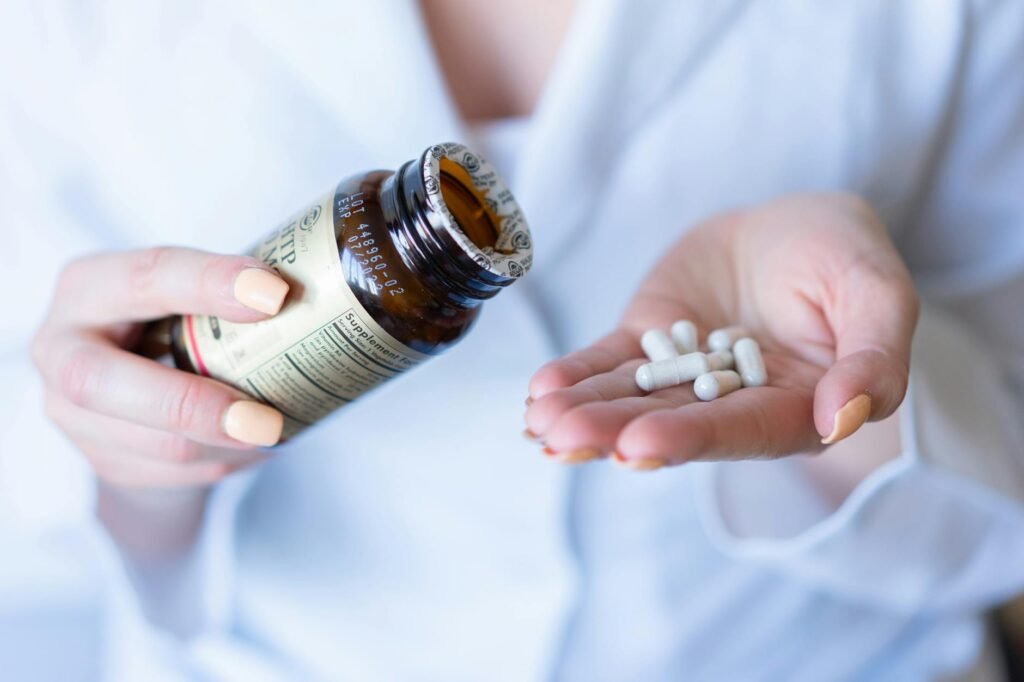
- Photograph the front label, Supplement Facts, Other Ingredients, lot number, and expiration date when you buy it.
- Search the exact product in the NIH Dietary Supplement Label Database to compare the label and see whether the item or a prior version is cataloged. (ods.od.nih.gov)
- If the bottle shows NSF or USP Verified, confirm the mark in the certifier’s directory instead of assuming the logo is genuine. (nsf.org)
- After a week, look at the label again and ask yourself these three basic questions: 1) Do I know exactly what the herb is and how much is in it? 2) Do I know what else is in this product? 3) Who do I contact if something doesn’t go as expected?
- If you have a side effect or quality concern, stop using the product and report it through the FDA’s reporting system or through the contact information on the label. (fda.gov)
That last step matters because regulators often learn about unsafe supplements only after products reach the market. Good records, including the receipt and lot number, make returns, reports, and conversations with a clinician much easier. (fda.gov)
Bottom line
The most trustworthy herb supplement label is not the prettiest one. It is the one that lets you audit the bottle without guessing: clear botanical identity, disclosed amounts, readable other ingredients, realistic claims, and a company you can trace. If a label makes comparison hard, it has already failed the basic job of earning your money. (ods.od.nih.gov)
Does “all natural” mean the herb is safer or better?
No. FTC and FDA consumer guidance both warn that “natural” does not mean safe or effective, and NSF notes that it is not an official federally regulated quality term for supplements. Treat it as marketing language, not proof. (consumer.ftc.gov)
What does the FDA disclaimer on a supplement label actually mean?
It usually means the label is making a structure/function or related claim, such as supporting a body function, rather than a legal disease-treatment claim. The FDA says those claims are not preapproved and generally must carry the disclaimer that the statement has not been evaluated by the FDA and that the product is not intended to diagnose, treat, cure, or prevent disease. (fda.gov)
Are proprietary blends always a deal breaker?
Not always. Some blended products may be fine. But if the main herb you care about is buried in a blend, you cannot tell how much you are getting because the label only has to show the total blend weight and ingredient order by weight. For a first purchase, that usually makes comparison harder and value weaker. (ods.od.nih.gov)
Does third-party certification mean the supplement works?
No. A seal can help with identity, contaminants, and label accuracy depending on the program, but it is not a guarantee that the herb is effective for your goal or appropriate for you. Think of certification as a quality-control clue, not a medical recommendation. (nsf.org)
What should I do if a supplement makes me feel worse?
Stop using it and contact a healthcare professional right away if the reaction seems serious. The FDA encourages consumers to report adverse events, and many labels include a domestic phone number or address for reporting serious problems to the company as well. (fda.gov)
References
- FDA: Dietary Supplement Labeling Guide – https://www.fda.gov/food/dietary-supplements/dietary-supplement-labeling-guide
- FDA: Questions and Answers on Dietary Supplements – https://www.fda.gov/food/information-consumers-using-dietary-supplements/questions-and-answers-dietary-supplements?=___psv__p_49073235__t_w__r_google.com_
- FDA: FDA 101: Dietary Supplements – https://www.fda.gov/consumers/consumer-updates/fda-101-dietary-supplements
- FDA: Avoiding Products Contaminated with Hidden Ingredients – https://www.fda.gov/drugs/medication-health-fraud/avoiding-products-contaminated-hidden-ingredients
- NIH Office of Dietary Supplements: Background Information: Dietary Supplements – https://ods.od.nih.gov/factsheets/dietarysupplements-Consumer/
- NIH Office of Dietary Supplements: Dietary Supplements: What You Need to Know – https://ods.od.nih.gov/factsheets/WYNTK-Consumer/
- NIH Office of Dietary Supplements: Dietary Supplement Label Database – https://ods.od.nih.gov/Research/Dietary_Supplement_Label_Database.aspx
- FTC Consumer Advice: Common Health Scams – https://consumer.ftc.gov/articles/common-health-scams
- FTC: Health Products Compliance Guidance – https://www.ftc.gov/business-guidance/resources/health-products-compliance-guidance
- NSF: Selecting Dietary and Nutritional Supplements – https://www.nsf.org/consumer-resources/articles/selecting-dietary-nutritional-supplements
- NSF: Services, Certifications and Marks FAQs – https://www.nsf.org/about-nsf/faqs/nsf-services-certifications-marks-faqs
- USP: USP Verified Mark – https://www.usp.org/verification-services/verified-mark