


The easiest way to overspend on herbal products is to blur together three very different things: a long history of traditional use, a plausible biological theory, and solid evidence in people. They are not interchangeable. In the United States, dietary supplements can generally reach the market without FDA approval for safety and effectiveness before sale, so the burden often falls on the buyer to separate a compelling story from a well-supported decision. (fda.gov)
That matters for your health, but it matters for your budget too. A supplement routine can quietly become a recurring monthly bill, and the expensive part is often not one bottle. It is the habit of paying for vague promises over and over. The smarter question is not, “Is this herb natural?” It is, “What kind of evidence supports this exact product, at this dose, for this purpose, and what would count as success?” (nccih.nih.gov)
TL;DR
- Traditional use can point to a useful lead, but it does not prove that a modern supplement works the way a label implies. (ods.od.nih.gov)
- Human clinical trials and systematic reviews offer the clearest answer about whether an herb is effective and reasonably safe for a specific use. (nccih.nih.gov)
- The label matters: species, plant part, extract type, dose, and added ingredients can make a study irrelevant to the bottle in your cart. (ods.od.nih.gov)
- A quality seal can help with identity and contamination concerns, but it does not prove the herb will help your condition. (usp.org)
Informational only, not medical advice. If you are pregnant or breastfeeding, have liver or kidney disease, depression, seizures, heart disease, cancer, or take prescription medication, include a clinician or pharmacist in the decision. Herbal products can interact with medicines, and some risks are serious. (nccih.nih.gov)

What traditional use tells you, and what it does not
Traditional use is evidence of cultural experience, repeated observation, and historical importance. That is not trivial. It can help researchers decide what deserves further study. But it still does not answer the modern consumer question: whether a specific capsule, tea, tincture, or extract helps a clearly defined problem in people like you. Botanicals can differ by species, plant part, preparation method, and concentration, and those differences may change both safety and potential effect. (ods.od.nih.gov)
That is why “used for centuries” should be treated as a starting clue, not a final verdict. The Office of Dietary Supplements notes that teas, decoctions, tinctures, and extracts can vary in strength, and that the term standardized has no legal or regulatory definition in the United States. A product may sound precise while still being a poor match for the research you think you are buying. (ods.od.nih.gov)
What scientific evidence adds
Scientific evidence asks narrower, more useful questions. Basic research can show that a plant compound affects a pathway in a lab. Clinical trials test whether people actually feel or function better. Systematic reviews and meta-analyses look across multiple studies to see whether results converge. NCCIH’s guidance is especially useful here: clinical trials offer the clearest information about effectiveness and safety in humans, while a single study rarely gives a definitive answer. Small studies are more likely to produce chance findings, blinding helps reduce bias, and a statistically significant result may still be too small to matter in real life. (nccih.nih.gov)
| Signal you found | What it can tell you | What it cannot tell you | Smart money move |
|---|---|---|---|
| Traditional use | The herb has a history of use for a purpose. (ods.od.nih.gov) | Whether your exact modern product, dose, or extract works. (ods.od.nih.gov) | Do more homework before spending much. |
| Lab or animal research | The herb may affect a biological pathway. (nccih.nih.gov) | Whether people feel better, or whether the benefit is large enough to matter. (nccih.nih.gov) | Interesting, but not a buying reason by itself. |
| Small pilot study in people | There may be an early signal worth testing further. (nccih.nih.gov) | Whether the result holds up in larger, better-designed studies. (nccih.nih.gov) | Keep spending low and expectations lower. |
| Randomized, blinded clinical trial | The strongest direct evidence about benefit and risk in people. (nccih.nih.gov) | Whether the result applies to a different product, dose, or population. (ods.od.nih.gov) | Promising if the product match is close. |
| Systematic review or meta-analysis | Whether several studies point in the same direction. (nccih.nih.gov) | Whether the included studies were high quality, or whether the effect is clinically meaningful. (nccih.nih.gov) | Usually the best quick summary for a buyer. |
| Third-party quality verification | That a product may meet standards for identity, potency, contaminants, and manufacturing. (usp.org) | Whether it works for your condition. (ods.od.nih.gov) | Helpful quality signal, not proof of benefit. |
Use the SEED score before you spend
For fast decisions, use this original scorecard: SEED. It keeps one weak claim from doing all the work. Score each category from 0 to 3, for a total of 12.
- S = Source of the claim. 0 means an ad, influencer, or customer review. 1 means broad traditional-use language. 2 means an official fact sheet or plausible research summary. 3 means multiple high-quality human reviews. (nccih.nih.gov)
- E = Evidence in people. 0 means none you can find. 1 means only lab, animal, or very small pilot work. 2 means some clinical trials with mixed results. 3 means consistent human evidence or supportive systematic reviews. (nccih.nih.gov)
- E = Exact match to the product. 0 means the study used a different species, plant part, or extract. 1 means the match is fuzzy. 2 means species and form are close. 3 means the study and bottle line up on species, extract type, and dose. (ods.od.nih.gov)
- D = Downside and dollars. 0 means a meaningful interaction or safety risk for you, or a high monthly cost with vague benefits. 1 means moderate risk or a poor value proposition. 2 means manageable downside with a clear goal. 3 means low apparent risk, a reasonable price, and an outcome you can actually track. (nccih.nih.gov)
0-4 = Hold – save your money for now! 5-8 = Try on a limited basis with specific reasons for doing so; set a clear end date and use a symptom tracker to monitor effectiveness. 9-12 = Add the item to your Shortlist of items to purchase in future (but don’t automatically buy it unless you find out that it definitely works for you.)

A realistic example with numbers
Suppose a household is considering three products at once: echinacea for colds at $18 a month, turmeric-curcumin for knee pain at $29 a month, and St. John’s wort for mood at $16 a month. That is $63 a month, or $756 a year. The research picture is not the same for all three. NCCIH says echinacea may slightly reduce the chances of catching a cold, but it is still unclear whether it shortens a cold. For turmeric, early evidence for osteoarthritis is encouraging, but products vary widely and highly bioavailable curcumin formulations may harm the liver. For St. John’s wort, evidence suggests benefit for mild or moderate depression, but it also has dangerous, sometimes life-threatening interactions with many medicines. (nccih.nih.gov)
| Herb | Quick research read | Likely SEED range | Practical decision |
|---|---|---|---|
| Echinacea | Some human evidence, but modest and mixed for the common cold; product differences matter. (nccih.nih.gov) | 6 to 7 | Do not buy it as a miracle rescue. At most, consider a low-cost trial for a specific season and decide in advance what benefit would count. |
| Turmeric/curcumin | Some encouraging evidence for osteoarthritis symptoms, but exact formulation matters and safety is not trivial. (nccih.nih.gov) | 6 to 7 | Only compare products that clearly disclose form and dose. Skip premium blends with vague claims unless you can justify the price. |
| St. John’s wort | Better evidence for mild to moderate depression than many herbs, but major interaction risk can make it a bad personal choice. (nccih.nih.gov) | 3 to 8 depending on your medication list | If you take prescriptions, this is pharmacist territory before checkout, not after. |
Understanding finance is easy; having stronger evidence doesn’t automatically give you better value. A product that has moderate evidence but very little risk may be more rational than an herb with a greater level of documentation but contraindicated with your medications. As a result, when it comes to the best way to spend your money, testing only one product at a time seems to be a good strategy with one clear stated purpose and one review date out on your calendar.
The label audit that separates a real product from a marketing story
A supplement label should slow you down, not speed you up. FDA says dietary supplement labels must include a Supplement Facts panel, serving size, declared ingredients and amounts, and a statement identifying the product as a dietary supplement. If the bottle makes structure-function claims, the familiar disclaimer that the statement has not been evaluated by FDA and that the product is not intended to diagnose, treat, cure, or prevent disease is legally required. If you see disease-treatment promises or language implying FDA approval, that is a major red flag. (fda.gov)
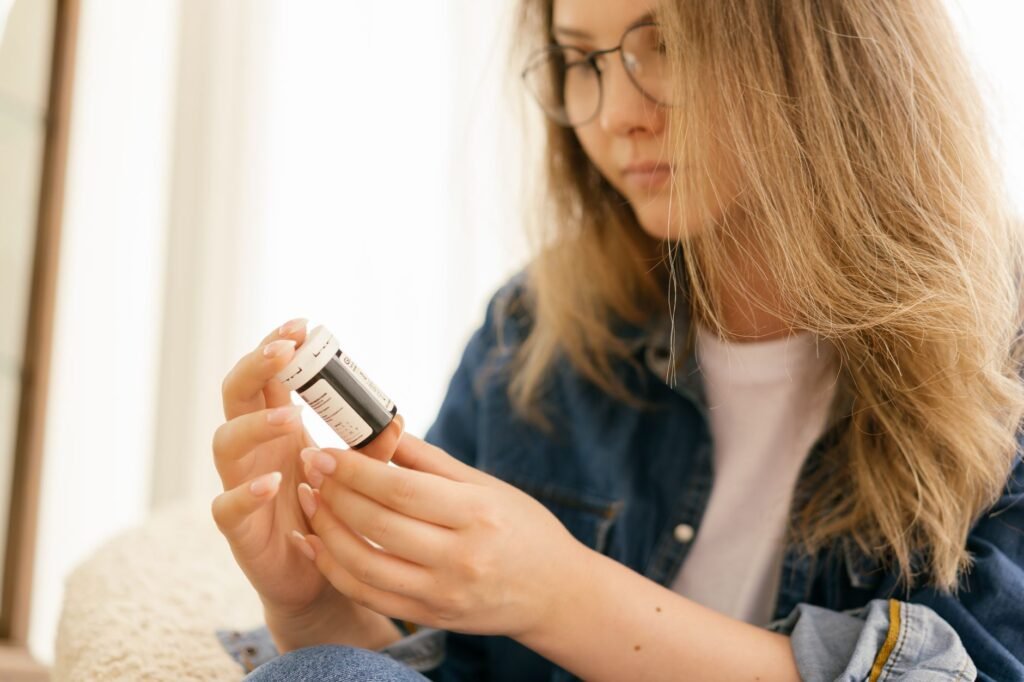
- Read the exact herb name and, if available, the Latin name. Similar common names can hide different plants. (ods.od.nih.gov)
- Check the plant part and the form: root, leaf, whole herb, tea, tincture, dry extract, oil, or standardized extract. A study on one form may not apply to another. (ods.od.nih.gov)
- Write down the dose per serving and the suggested frequency. Compare that with what human studies actually used. (ods.od.nih.gov)
- Look for extra active ingredients, especially absorption boosters such as piperine in curcumin products, because they can change both effect and risk. (nccih.nih.gov)
- Treat quality marks correctly. USP Verified is a quality signal about contents, contaminants, performance, and manufacturing, not proof that the herb is effective for you. (usp.org)
- Reject products that claim to cure disease, promise rapid results, or market themselves as FDA-approved supplements. (fda.gov)
Common mistakes that turn herbal research into expensive guesswork
- Treating a tradition as if it were a clinical trial. Historical use can generate a hypothesis, but it does not settle effectiveness for a modern supplement. (ods.od.nih.gov)
- Using a study on a concentrated extract to justify buying a tea, gummy, or proprietary blend. Form and dose matter. (ods.od.nih.gov)
- Confusing statistically significant with clinically meaningful. A result can be real and still not matter much in daily life. (nccih.nih.gov)
- Ignoring sample size, blinding, and repetition. Small, unblinded, one-off studies deserve caution. (nccih.nih.gov)
- Assuming natural means safe, or assuming a quality seal proves effectiveness. Neither is true. (nccih.nih.gov)
When the evidence stays messy
Herbal evidence often remains messy for reasons that are real, not mysterious. Whole traditions may use combinations, preparation rituals, or individualized treatment rather than one isolated ingredient. Commercial products may vary so much that one brand is not a clean substitute for another. And even when clinical trials exist, they may be too small, too short, or too inconsistent to give a final answer. That uncertainty is not proof that an herb works. It is also not proof that it fails. It simply means your confidence level should stay modest. (ods.od.nih.gov)
If your first-choice herb does not clear that bar, use a backup plan. Lower the spend. Avoid stacks of multiple new supplements. Choose one product, one outcome, and one trial window, such as four to eight weeks if the product’s official information suggests that time frame is reasonable. If the goal is serious, such as depression, uncontrolled pain, blood sugar, blood pressure, or menopausal symptoms severe enough to affect work or sleep, move the decision out of the supplement aisle and into a clinician visit. NCCIH and FDA both warn against substituting supplements for proven medical care. (nccih.nih.gov)
How to verify your conclusion before checkout
- Start with NCCIH’s Herbs at a Glance or the herb-specific NCCIH page. It is usually the fastest official summary of what the science says and which safety concerns matter most. (nccih.nih.gov)
- Read the NIH Office of Dietary Supplements background pages or ingredient fact sheets to understand forms, labeling, and standardization issues. (ods.od.nih.gov)
- Search PubMed for the herb plus your condition and terms like randomized, placebo, or systematic review. NCCIH has a step-by-step guide for doing this. (nccih.nih.gov)
- Use the NIH Dietary Supplement Label Database to compare labels and ingredient amounts. Remember that inclusion in the database is not an endorsement or guarantee of effectiveness. (ods.od.nih.gov)
- Check FDA and FTC alerts if the product makes aggressive claims, seems to promise a cure, or looks too good to be true. (fda.gov)
- If you take any medication, do a pharmacist check before you buy, not after. Herb-drug interactions are a major failure point in self-research. (nccih.nih.gov)
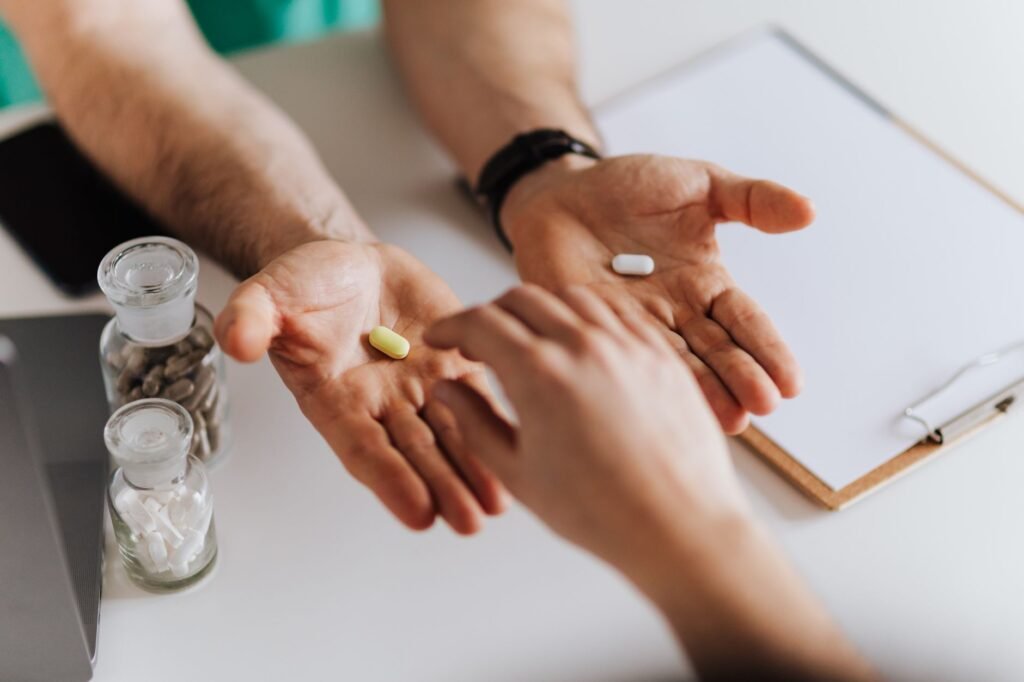
If you have a bad reaction, stop the product, seek medical advice, and report the adverse event. FDA specifically encourages consumers and clinicians to report supplement-related problems. (fda.gov)
Bottom line
Traditional claims about an herb should always be honored but shouldn’t just be trusted when making a purchase. When looking at any herb, the first step is to separate the story about the herb from the research (the evidence) and then separate research from the product. If the herb’s claims are vague, its label is vague, its evidence supporting the product is weak, and there is significant risk of the herbs interacting with other foods and medications, it may be best to not even try to purchase the herb.
Does “used for centuries” mean an herb works?
No. It means people have used it over time, which can be an important historical signal, but it does not prove that a modern supplement works for a specific condition. Modern evidence depends on the exact species, plant part, preparation, dose, and human trial results. (ods.od.nih.gov)
If a label says “standardized,” is that enough?
No. ODS notes that standardization is something manufacturers may use for extracts, but U.S. law does not require supplements to be standardized, and the term has no legal or regulatory definition in the United States. It is one detail, not a verdict. (ods.od.nih.gov)
Does a USP seal mean the herb is proven to work?
No. USP Verified is about product quality, including listed ingredients, potency, contaminants, and manufacturing controls. It is useful, but it does not establish clinical effectiveness for your problem. (usp.org)
Should I trust one positive study?
Usually not. NCCIH says a single study rarely provides a final answer. Look for repeated findings, larger sample sizes, proper blinding, and systematic reviews that show whether the result holds up. (nccih.nih.gov)
Can an herb have decent evidence and still be a bad personal choice?
Yes. St. John’s wort is the clearest example. NCCIH says it may help mild or moderate depression, but it also interacts with many medicines, including birth control pills, warfarin, some heart drugs, some seizure drugs, and some antidepressants. Personal safety can override general evidence. (nccih.nih.gov)
References
- NCCIH: Herbs at a Glance – https://www.nccih.nih.gov/health/herbsataglance
- FDA: FDA 101: Dietary Supplements – https://www.fda.gov/consumers/consumer-updates/fda-101-dietary-supplements
- FDA: Questions and Answers on Dietary Supplements – https://www.fda.gov/food/information-consumers-using-dietary-supplements/questions-and-answers-dietary-supplements
- NIH ODS: Botanical Dietary Supplements Background Information – https://ods.od.nih.gov/factsheets/BotanicalBackground-Consumer/
- NCCIH: How To Make Sense of a Scientific Journal Article – https://www.nccih.nih.gov/health/know-science/how-to-make-sense-of-a-scientific-journal-article/overview
- NCCIH: How To Find Information About Complementary Health Approaches on PubMed – https://www.nccih.nih.gov/health/how-to-find-information-about-complementary-health-approaches-on-pubmed
- NCCIH: Echinacea – https://www.nccih.nih.gov/health/echinacea
- NCCIH: Turmeric – https://www.nccih.nih.gov/health/turmeric?page=reviewsnew-chapter-vitamins-review&qutm=1&session_id=GS2.1.s1767484800%24o1%24g0%24t1767484800%24j60%24l0%24h0&uid=982a67fas16&uid=ab8e3b4ds16
- NCCIH: St. John’s Wort – https://www.nccih.nih.gov/health/st-johns-wort
- NCCIH: 6 Tips: How Herbs Can Interact With Medicines – https://www.nccih.nih.gov/health/tips/tips-how-herbs-can-interact-with-medicines
- NIH ODS: Dietary Supplement Label Database – https://ods.od.nih.gov/Research/Dietary_Supplement_Label_Database/
- FTC Consumer Advice: Common Health Scams – https://consumer.ftc.gov/articles/common-health-scams