

TL;DR
- The mistake is not using herbs by itself. It is assuming that “herbal,” “natural,” or “botanical” automatically means low-risk for sensitive skin.
- Sensitive skin often reacts to fragrance, essential oils, citrus oils, and too many new products at once. Many herbal products contain exactly those triggers.
- A simpler routine is usually cheaper and easier to troubleshoot: gentle cleanser, cream or ointment moisturizer, and sunscreen.
- Use the HERB Risk Filter in this article before buying any herbal product. It helps you catch both irritation risk and wasteful spending.
- If you get swelling, blistering, an eye-area rash, or repeated reactions, stop using the product and speak with a board-certified dermatologist or allergist. Patch testing may help identify the trigger.
Many people who have delicate skin create a business opportunity by substituting their basic skincare routine for a collection of botanical skincare products. The reason they do this is that companies market the botanical product as having properties that are softer, milder, and/or less irritating than their chemical equivalent. The words “calendula” “lavender,” and “tea tree oil” all suggest that the product will be better for you than using products that contain acids, fragrances, or benzoyl peroxide. However, your skin doesn’t read the marketing materials, it reacts to the frequency of exposure, the amount of product used, the number of irritating ingredients contained in the product, and to the integrity of your skin’s protective barrier.
Some of the best “botanical” skincare routines can produce redness, burning and/or rash responses. Then you have lost money. You purchased an herbal toner, a herbal mist, an herbal face oil, an herbal face balm, and an herbal face repair cream to calm the irritation. You then have to purchase a new cleanser because the original cleanser began to sting. For sensitive skin, a less expensive option would usually be the more standard option.
The real problem: treating “herbal” like a safety label
The guidance from FDA makes an excellent point which is often blurred by beauty marketing: just because an ingredient is from a plant does not mean it is safe for the skin. Just because something is plant based doesn’t mean it can’t be an irritant, toxic, and/or trigger an allergic reaction. FDA also states that reactions to cosmetics can manifest as localized itching and redness, as well as contact dermatitis.
One of the top reasons that many people find success with using natural/organic products is because they are often made with pure plant ingredients. The use of pure plant ingredients, and in particular essential oils, is why many natural/organic products carry a strong scent. Because of that, many natural/organic products can be problematic for individuals with sensitive skin due to the fact that many fragrance ingredients are one of the most common allergens noted by the FDA. Furthermore, the fact that fragrance formulations are designed and listed as either “fragrance” or “perfume” means that you are likely to find yourself completely unaware of what is inside the bottle and thus unable to judge its suitability for your skin.
An important note from the American Academy of Dermatology is two facts: First, dermatology is common to be prescribed scents only for dry and sensitive skin; therefore, when looking for products to use on both, make sure they are “fragrance free”. Secondly, instead of using a “scented” product, you might want to consider using an unscented product. While an unscented product does not have a detectable scent, it can include scent masking portions since it has the ability to have an odor yet still irritate you through its formulation.
Many commonly used topical herbal ingredients may react negatively with some users. For example, topical tea tree oil can cause redness and/or irritation to skin, particularly older varieties of tea tree oil have been more likely to do so. Lavender oil can induce allergic skin reactions on the skin, and peppermint oil has also been associated with causing skin rashes and irritation. Also, the FDA has identified that users who apply citrus oils (citrus-based products) before going out in the sun may have a potential risk of developing harmful effects due to their exposure to sunlight, particularly if they are sensitive or have pre-existing skin conditions. Therefore, sensitive skin should not rely on these products being automatically free and clear of potential harm/effect.
Use the HERB Risk Filter before you buy
This four-part screen (HERB) should be used as a reference before you buy a new herb-based skin product. Hidden fragrance, Exposure risk, Routine stacking, and Barrier status. If you use this system, then you will know if the product can irritate your skin or if it will not work and the money you spent on it was wasted.
- Hidden fragrance: Does the ingredient list include fragrance, parfum, essential oils, or strongly aromatic plant oils such as lavender, peppermint, tea tree, citrus, or bergamot? If yes, add 1 point.
- Exposure risk: Is it a leave-on product such as a mist, serum, facial oil, or balm that sits on the skin for hours? If yes, add 1 point.
- Routine stacking: Are you planning to use it with retinoids, exfoliating acids, acne treatments, strong vitamin C, or after shaving or over-exfoliating? If yes, add 1 point.
- Barrier status: Does your skin already sting, burn, flake, feel tight, or flare with eczema or rosacea? If yes, add 1 point.
How to score it
A 0-1 indicates that the item may be worth trying, but take some time to research before attempting to obtain it. A 2 indicates only mild interest, based on your ability to find a travel size or sample size product from the manufacturer. A score of three means it is very unlikely that you will be satisfied if you buy a product designed for sensitive skin. A score of four means there is no point in spending your money on this product, and you should look for another fragrance-free or mild cleanser/moisturizer.
For instance, using a lavender face mist can be a high-rated item quickly. The fact that you leave it on, have an aromatic oil ingredient, and apply it to a red face has quickly made this my number 1 item in “potential use” rating before I look at the rest of my routine.
In terms of personal finance, this would not be considered as a skin investment; rather it would be considered to be just about ready to send back for a refund.
Why this mistake gets expensive fast
The issue with pricing is not an individual poor product; it is rather that you have an inadequate system for troubleshooting your products. The note from AAD explaining how cheap items can be effective indicates multiple options will only increase the cost of product use as well as cause irritation to the skin. The sensitive skin user needs to know which products work best for them in order to get the most clarity, not the most variety. If you added four herbal products on a Saturday and broke out on a Tuesday, you don’t have a good grasp of which of the four caused the breakout. In fact, not having clarity about the cause of the breakout will make a user spend more, not less, on products and could eventually lead to purchasing everything available.
Consider an illustrative routine reboot. A shopper buys a $22 botanical toner, a $26 facial oil, a $14 lavender mist, and a $19 tea tree spot treatment because each product sounds gentle in a different way. Total: $81 before tax. Three days later, the skin starts burning. Now the shopper replaces the routine with a $12 gentle cleanser, an $18 fragrance-free cream, and a $15 sunscreen. Total rescue spend: $45. If there is also a dermatologist visit with a $40 copay, the “gentle herbal switch” costs $166. That is why sensitive skin usually benefits from introducing one product at a time, not a coordinated set.
| If you are considering | Why it can irritate sensitive skin | Lower-risk move | Spending rule |
|---|---|---|---|
| Lavender, peppermint, or tea tree face mist | Aromatic leave-on formulas increase exposure and may sting already reactive skin | Skip the mist and use a plain cream moisturizer on damp skin | Do not pay premium prices for scented water |
| Citrus oil serum or brightening botanical oil | Certain citrus oils can be a problem on sun-exposed skin, and oily leave-on formulas are hard to troubleshoot | Use a basic moisturizer plus separate sunscreen instead | If the label leans on glow claims but hides the fragrance load, pass |
| “Unscented” cream with parfum or fragrance on the label | Unscented does not mean fragrance-free | Choose a fragrance-free cream or ointment with a short ingredient list | Spend on the biggest plain moisturizer your budget allows, not the prettiest label |
| A full herbal routine launched all at once | You cannot isolate the trigger when several new products land together | Add one new product at a time after your skin is stable | No bundles, no matching sets, and no backups until your skin proves it can tolerate the first item |
A lower-risk routine that usually costs less
If you’ve ever had sensitive skin that gets irritated, you probably won’t want to try to find some new, more exotic herb as your first step towards treatment. The best thing to do is to eliminate any variables. As stated in the AAD, try to keep things simple by focusing on the three basic steps of using a gentle facial cleanser (or foaming cleanser), a non-irritating moisturizer and sun protection. Many dermatologists will recommend using creams (or ointments) to help repair dry or reactive skin versus lotions. They typically provide better hydration than lotions would.
- Run a 7-day reset. Stop fragranced products, essential-oil products, scrubs, exfoliating acids, and any new herbal treatments you started recently.
- Use one gentle cleanser only as needed, not a rotating lineup. If cleansing twice a day leaves you tight or stinging, cut back.
- Apply a fragrance-free cream or ointment while skin is still slightly damp. Reapply if skin feels dry later in the day.
- Use sunscreen every morning. If sunscreen has been part of the irritation problem, test one fragrance-free option by itself after the reset rather than trying three at once.
- Do not add a new active and a new herbal product in the same week. If you want to test something, test only one thing.
- Buy the smallest practical size first. Sensitive skin should not be asked to “finish the bottle” just to justify the purchase.
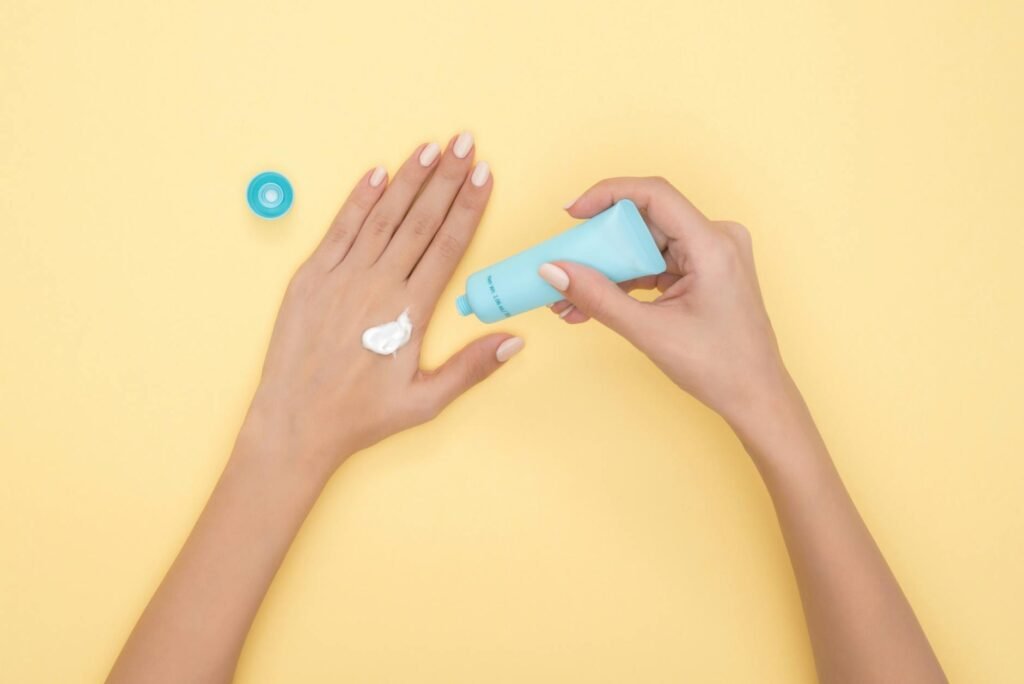
Following your reset, slowly bring back in only one product at a time. Using a small area of skin to test for irritation is a good rule of thumb as is allowing 14 days before incorporating it into your entire routine. This doesn’t take the place of patch testing, but it gives you a better chance of knowing if it will produce a reaction for you, versus making a “maybe” into an “absolutely” in terms of how you will react after breaking out with a full-face of that product. If you experience stinging, burning, increased heat, tightness, or itching from a product, that is information you should use to gauge whether or not it’s “working,” not an indication that it isn’t “working.”
Common mistakes that keep the irritation going
- Confusing “natural,” “clean,” or “plant-based” with low risk.
- Trusting the front label and never reading the ingredient list.
- Choosing “unscented” instead of checking whether the product is actually fragrance-free.
- Using multiple botanical products together, especially a toner, mist, serum, and oil in the same routine.
- Applying herbal products to already compromised skin after exfoliation, shaving, over-cleansing, or a retinoid night.
- Keeping old essential-oil products too long, even though oxidation can make some ingredients more irritating.
- Trying to rescue a reaction with another trendy product instead of simplifying the routine.
- Buying full-size products before your skin has tolerated even one week of use.
When a simpler plan is not enough
There are instances where “sensitivity” doesn’t necessarily mean that you have “sensitive skin.” If your skin is reacting to simple things (such as basic products), if your rash occurs on your eyelids or lips, or if you are experiencing repeated flare-ups of the same area with different products – you should not keep guessing about what your skin is reacting to by shopping online. You should consult with a doctor to determine whether or not you are actually having a skin condition such as eczema, contact dermatitis, rosacea, perioral dermatitis or any other condition that requires a medical diagnosis.
If you have been unable to solve your product history on your own, consider visiting a board-certified dermatologist or allergist to help identify allergens through patch testing. According to the AAD, patch testing can assist in identifying the cause of an allergic skin reaction and is distinct from a skin prick test. The procedure consists of the dermatologist applying a small amount of the suspected allergens to the skin, checking the area after 48 hours, and checking again at a later time because using any substance on your skin may result in contact allergies that take time before they develop. If you have trouble reading your product history, visiting a dermatologist or allergist will help you figure out which product(s) to continue using and which ones not to use anymore.
Consumers can report any adverse reactions that occur from using a cosmetics product through the FDA system as well as provide any additional information regarding their experience with a specific product. This is separate from medical treatment; however, it will assist in tracking safety issues with cosmetics products. When experiencing an adverse reaction, please retain the product packaging and the ingredient list whenever possible.
How to verify the advice before you spend again
Advice about skin care should pass an audit. Here’s a quick and easy audit you can do in five minutes while waiting at the checkout line. Don’t only look at the front of the bottle (label). Read the ingredient list for fragrance, parfum, essential oils, citrus oils, and any other long-winded “calming botanical blend” phrases which may have many aromatic extracts in them. Next, compare the promise of the product with your current skin condition. For example, if your skin is irritated, it typically makes more sense to purchase a plain moisturizer than to try something new that has herbs in it.
- Take a photo of your skin before starting a new product and another after several uses in the same lighting.
- Keep a short reaction log with the date, product name, and where you applied it.
- Introduce only one new item at a time so the result means something.
- Buy the smallest size you can reasonably test.
- If a product claims to be soothing but stings on contact, trust your skin’s response over the marketing copy.
- If you are repeatedly uncertain, take the ingredient list to a dermatologist or allergist and ask whether patch testing makes sense.
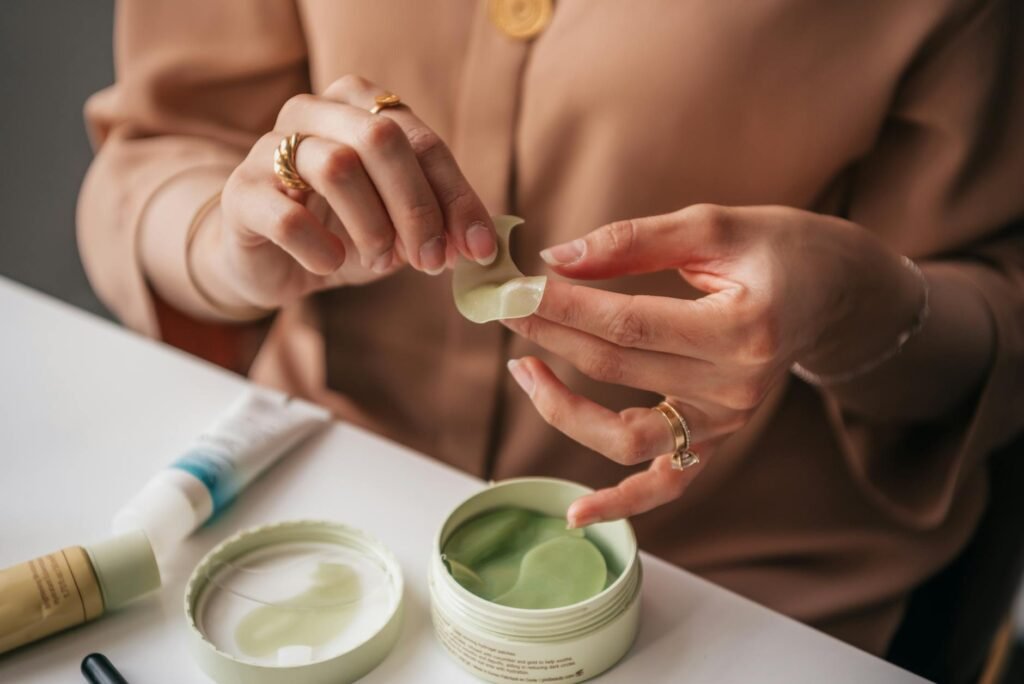
Here’s another budgeting lesson from the original article. When you have to explain in multiple sentences what a product has done to your face or why it is bad for your skin, then that is likely a bad purchase. Shopping with sensitive skin should be boring on purpose. Look for products that have short ingredient lists, simple consistencies, a clear purpose and only one difference per year.
Bottom line
The misconception about herbal skincare causing irritation on those with sensitive skin is this: believing anything that says it is an “herbal” product will be gentle. In reality, many of these products contain high amounts of fragrance, essential oils, and layered routines which can cause reactions more likely and may end up costing more money to troubleshoot. If your skin reacts to products, you should do fewer things, buy fewer products, and require every product to prove it deserves to be used. In this area, the best buy can frequently be found in relatively simple or plain products.
FAQ
Are herbal skincare products automatically better for sensitive skin?
Plant-based ingredients can also cause skin irritation and trigger allergies. When choosing products for sensitive skin, you should focus on the list of ingredients, the amount of fragrance used, and the order in which you do your routine instead of whether the product’s label says it is herbal or natural.
Is “unscented” safe if I react to fragrance?
Not always. Both FDA and the dermatology experts say that even though a product says “unscented”, there could be things added to it to help cover-up the smell. If you have sensitive skin, you probably want to use fragrance-free products. You should still double-check the ingredient lists to be sure you’re not allergic or have any reactions to them.
What if I used tea tree or lavender before and had no problem?
Sensitivity to things we’ve previously accepted doesn’t have any predictive value in terms of future acceptance. As time passes, I’ve developed sensitivities to some things I’ve consumed, and depending on how those items were stored; how long they have been exposed to air; and how well protected my skin barrier is when applying those items could cause those things to irritate my skin.
What is the cheapest way to test a new skincare product?
If possible, avoid buying the full size bottle and get a mini, sample or single product instead, then try that product on its own after your routine has settled down. If you try two or three new products in a single week, this often results in wasted time and money, as well as confusion.
When should I stop experimenting and see a dermatologist?
Medical attention should be sought after developing symptoms of swelling, blistering or continual itching rash, repeated reactions occurring in one particular area or difficulty tolerating even basic types of products. A dermatologist or an allergist may recommend patch testing to help determine the cause of the reaction.
References
- FDA: Allergens in Cosmetics – https://www.fda.gov/cosmetics/cosmetic-ingredients/allergens-cosmetics
- FDA: Fragrances in Cosmetics – https://www.fda.gov/cosmetics/cosmetic-ingredients/fragrances-cosmetics
- FDA: Aromatherapy – https://www.fda.gov/cosmetics/cosmetic-products/aromatherapy
- FDA: How to Report a Cosmetic Product Related Complaint – https://www.fda.gov/cosmetics/resources-consumers-cosmetics/what-should-i-do-if-i-have-reaction-side-effect-cosmetic-product
- American Academy of Dermatology: Dermatologists’ Top Tips for Relieving Dry Skin – https://www.aad.org/public/everyday-care/skin-care-basics/dry/dermatologists-tips-relieve-dry-skin
- American Academy of Dermatology: Skin Care on a Budget – https://www.aad.org/public/everyday-care/skin-care-basics/care/skin-care-budget
- American Academy of Dermatology: Patch Testing Can Find What’s Causing Your Rash – https://www.aad.org/public/diseases/eczema/types/contact-dermatitis/patch-testing-rash
- NCCIH: Tea Tree Oil – https://www.nccih.nih.gov/health/tea-tree-oil
- NCCIH: Lavender – https://www.nccih.nih.gov/health/lavender
- NCCIH: Peppermint Oil – https://www.nccih.nih.gov/health/peppermint-oil
- National Eczema Association: The Ecz-clusion List – https://nationaleczema.org/eczema-products/the-ecz-clusion-list/