

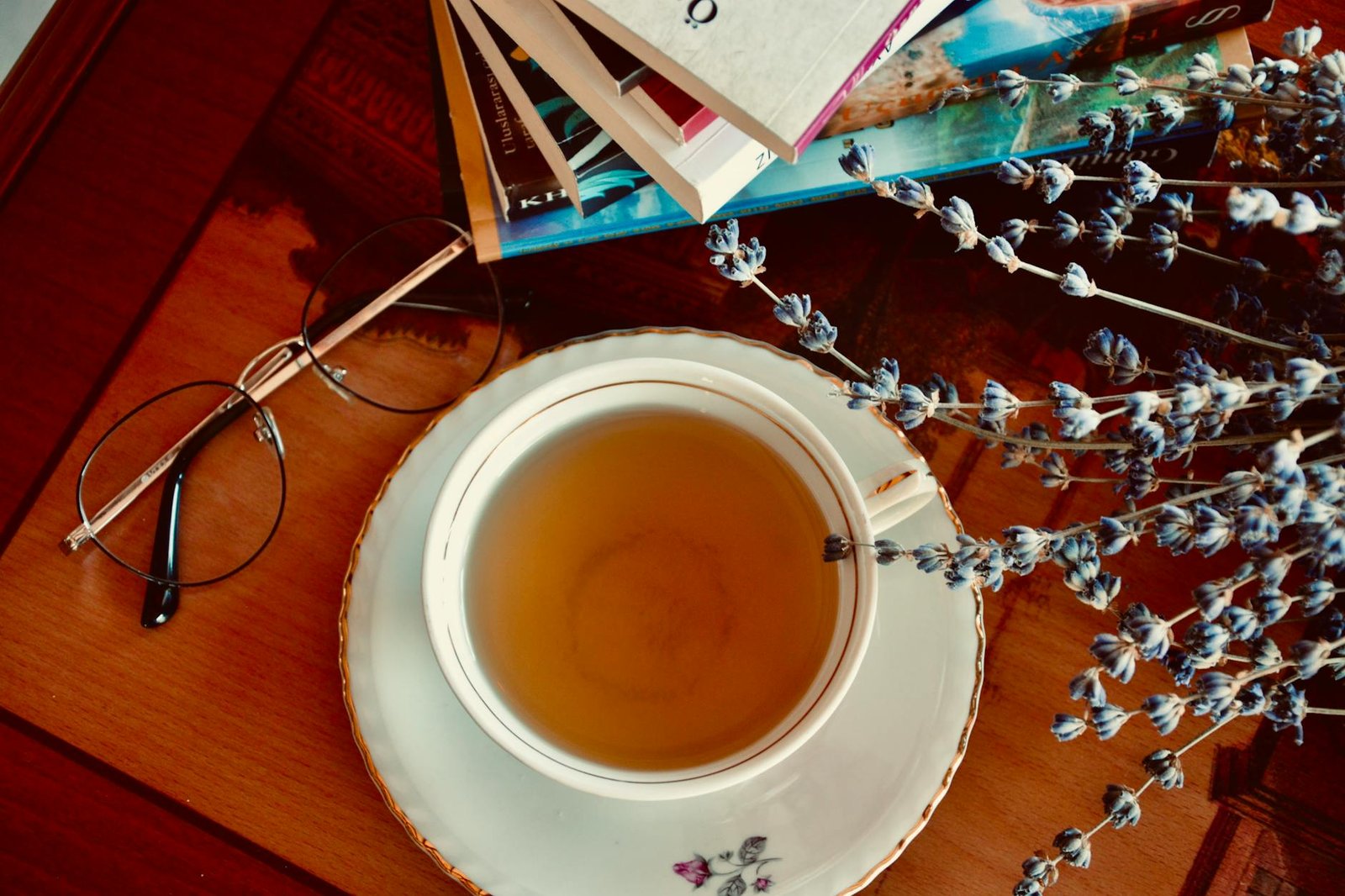
- Build herbal rituals around a specific moment in your day, not around a promise that an herb will fix a health problem.
- Use the RITUAL Filter: Role, Ingredients, Tolerance, Unit cost, Avoid claims, Low friction.
- Start with low-risk, low-cost formats such as grocery-store herbal tea you already enjoy, a dried sachet, or a simple foot soak.
- If a product leans on words like detox, immunity, pain relief, hormone balance, or sleep cure, treat it as a health-product decision, not a cozy self-care buy.
- Pressure-test your ritual after 14 days by checking cost per use, real usage, skin or scent reactions, and whether you still like it without the marketing story.
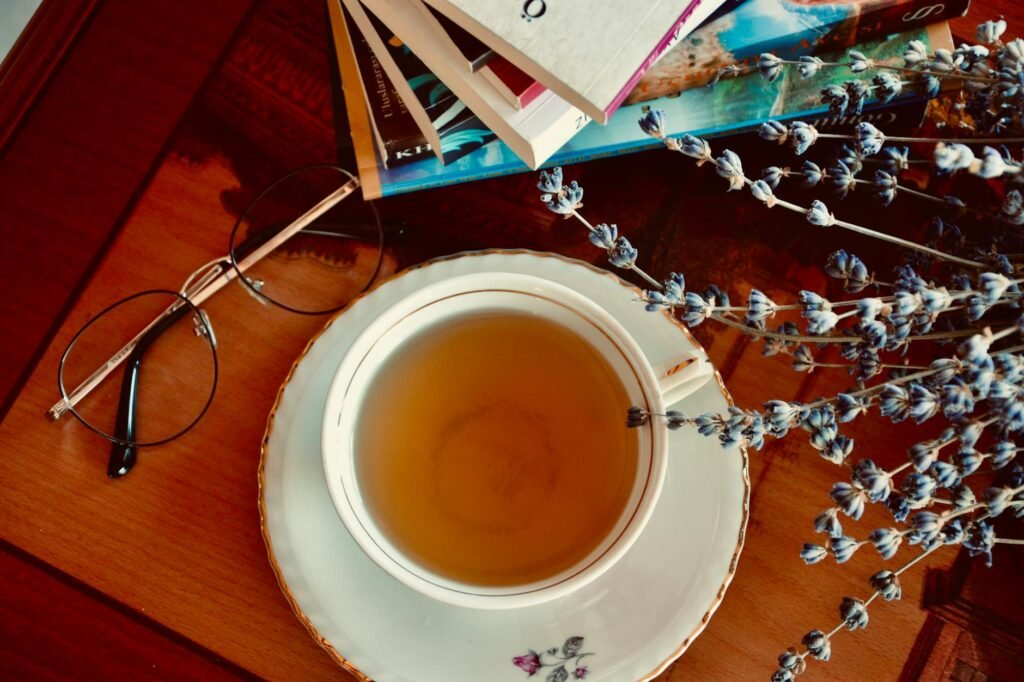
A lot of herbal self-care spending is really spending on implication. The mug, bath soak, or linen spray may be pleasant on its own, but the price often jumps when the product starts hinting that it can treat insomnia, fix stress chemistry, balance hormones, or relieve pain. Under FDA rules, intended use matters. When a product is marketed to treat or prevent disease, or to affect the body’s structure or function, it may be regulated as a drug even if it looks like a cosmetic or fragrance. (fda.gov)
That distinction is useful for ordinary shoppers. If what you want is a softer landing after work, a cue to step away from your laptop, or a more deliberate evening routine, you usually do not need a concentrated herbal supplement. Herbal supplements can interact with prescription and over-the-counter medicines, and FDA does not approve dietary supplements for safety and effectiveness before they are sold. (nccih.nih.gov)
To create a strong sensory experience, use herbs to bring personality (performing), routine (in/out), and atmosphere (scent) into your life. Remember to consider your senses such as smell, warmth, texture, color, and repetition when integrating rituals into your daily routine. Because rituals create structure for your day, they provide grounding to how you perceive your days. You do not need to create a medicinal potential to justify creating a place in your budget for your rituals.
Start with the job of the ritual, not the herb
Identify the exact moment that you want to improve before you buy anything. The ten minutes between getting off work and having dinner? The first half hour of your children being in bed? When you are resetting your desk midafternoon? A ritual serves its purpose best if it has only one job; to indicate a transition, create calmness to an area, or to slow a person’s pace down long enough to observe that the day has changed.
Once you know what you need to do, everything else falls into place; therefore, you could use chamomile to make tea, lavender to make an aromatic sachet for your drawers, and mint or rosemary for the kitchen reset. What we want to emphasize here is that you should choose a single sensory cue, not necessarily a well-known herb you have chosen to use in a particular job, and that you will be using the same herb repeatedly.
Use the RITUAL Filter before you buy
This is a simple scorecard to evaluate claims-safe, budget-friendly self-care with herbs. You will evaluate each category (Role, Ingredient, Tolerance, Unit Cost, Avoid Claims, and Low Friction) with either 0, 1 or 2 points. R = Role: do you know when you will use this item? I = Ingredients: can you identify what ingredients are in the item? T = Tolerance: is the format something that will work well for your body and household? U = Unit Cost: what is the cost for each use in the most likely way? A = Avoiding claims: is the product using sensory or cosmetic language instead of medical? L = Low Friction: can you use the item without any additional equipment/clutter/setup time of at least 30 minutes?
| Factor | 0 points | 1 point | 2 points |
|---|---|---|---|
| Role | I cannot say when I would use it | General mood item | Specific moment in the day |
| Ingredients | Long blend or vague label | Partly clear | Short list I understand |
| Tolerance | I already know I am sensitive to it | Unsure, needs extra caution | Low-risk format I already tolerate |
| Unit cost | Over $3 per use | $1 to $3 per use | Under $1 per use |
| Avoid claims | Promises sleep, pain relief, detox, immunity, or hormone effects | Heavy wellness implication | Sensory or cosmetic language only |
| Low friction | Needs special tools or too much setup | A little fussy | Easy to repeat in under 10 minutes |
Aim for 8 points or more. If something scores low on Avoid claims, that is the clearest sign to pause. A product can say it smells floral, softens skin, or scents a room. Once it starts promising disease treatment, sleep outcomes, pain relief, or other body-function effects, you are no longer shopping for a simple ritual. FDA and FTC treat health-related claims as a different category that must be truthful, not misleading, and properly substantiated. (fda.gov)

Choose a format that fits your budget and your tolerance
| Format | Typical starter cost | Approx. cost per use | Best use case | Watch-out |
|---|---|---|---|---|
| Grocery-store herbal tea you already enjoy | $4 to $7 | $0.25 to $0.45 | Evening cue or desk break | Keep it ordinary; do not treat it like a supplement |
| Dried lavender or mint sachet for a drawer, desk, or nightstand | $8 to $12 | Pennies | Low-effort scent cue | Skip it if fragrance tends to trigger headaches or irritation |
| Unscented foot soak with herbs contained in a muslin bag | $12 to $20 | $1 to $2 | Weekend reset | Patch test related products first and stop if skin reacts |
| Fresh rosemary or mint clipping in a small jar | $3 to $5 | Under $1 | Visual cue in kitchen or bathroom | This is mostly atmosphere, which is perfectly fine |
| Plain tray with mug, towel, and one herb item | $0 to $10 if you use what you own | Varies | Turning a routine into a ritual | Do not overbuy decor when the structure is the real value |
The cheapest useful format is often the right first format. If scent and repetition are what you want, capsules, tinctures, and complex blends are usually unnecessary. Keep labels short and readable. FDA says retail cosmetics generally require ingredient declarations, but some components may still appear simply as “fragrance” or “perfume.” FDA also notes that terms such as “fragrance-free,” “for sensitive skin,” and “hypoallergenic” do not have a federal standard in the US that guarantees you will not react. (fda.gov)
A realistic $26.46 starter setup
Suppose a two-person household sets aside $40 a month for small self-care purchases and wants one weekday ritual plus one weekend ritual. Instead of buying a $32 bottle of trendy herbal drops, they put together a simple setup: chamomile tea for $4.49, dried lavender for $8.99, unscented Epsom salt for $6.99, and a pack of muslin bags for $5.99. They already own mugs, a small tray, and a foot basin. Total outlay: $26.46.
That gives them roughly 18 tea servings, six weekend foot soaks, and a loose dried-herb sachet for a nightstand or linen drawer. Even if they only use part of it, the routine still has a fair shot at coming in under $1.50 per real use. More important, every item has a clear job. Nothing depends on a medical promise to feel worthwhile.
That is the money angle people often miss. If the goal is atmosphere, transition, and repeatability, buy for atmosphere, transition, and repeatability. Do not pay supplement-style prices unless you are intentionally evaluating a supplement, with the added caution that herbal supplements can interact with medicines and are not FDA-approved for safety and effectiveness before marketing. (nccih.nih.gov)

Build the ritual in 15 minutes
- Pick one transition point, such as 5:30 p.m., after the dishes, or 30 minutes before bed.
- Choose one herb format only. One tea, one sachet, or one soak is enough for a first trial.
- Set a hard spending cap. For most first attempts, $25 to $40 is plenty if you are using items you already own.
- Create a visual home for it: a tray, basket, drawer, or shelf. Rituals are easier to repeat when they are already staged.
- If anything will touch your skin, keep the ingredient list short and stop at the first sign of irritation.
- Repeat the same routine three times a week for two weeks before adding anything else.
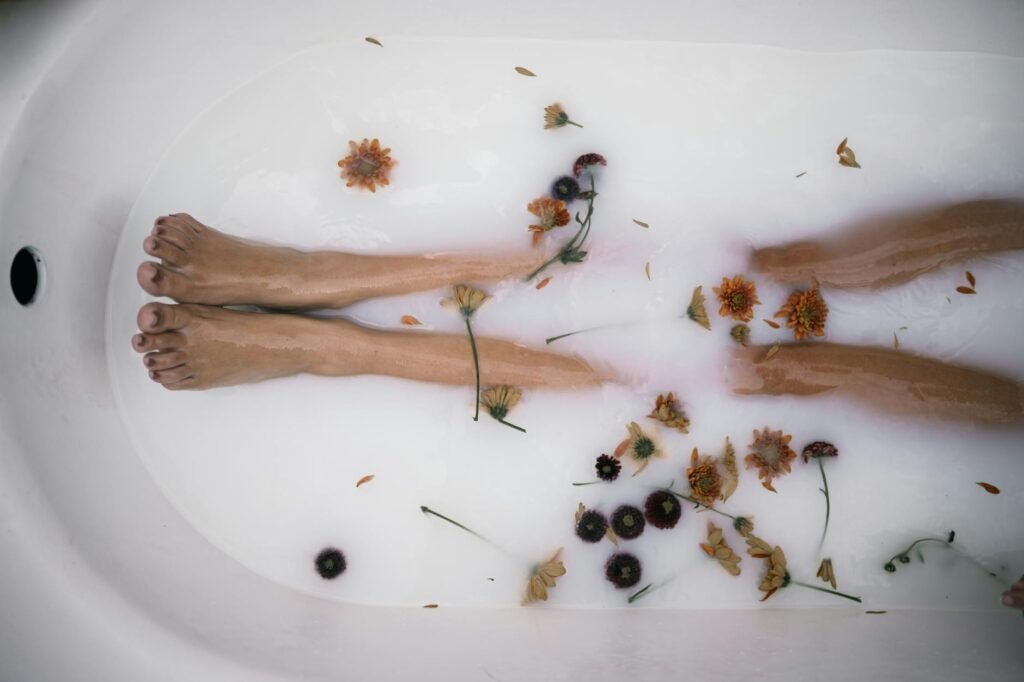
Words that stay sensory, not medical
A simple editing rule helps: describe what a person can directly notice, not what you cannot prove. Good ritual language is concrete. It talks about smell, texture, temperature, pacing, and time. Claims language jumps ahead to outcomes like treatment, prevention, cure, or body-function change. FDA even gives examples showing that fragrances or massage oils can become drug-type products when they are marketed for outcomes such as helping someone sleep or relieving muscle pain. (fda.gov)
- Say: “bright mint scent,” “soft floral note,” “warmer evening cue,” or “a slower end to the workday.”
- Say: “This helps me mark the transition from work to home.”
- Say: “I like the scent and the routine, so I actually use it.”
- Avoid: “detox,” “anti-inflammatory,” “immune-boosting,” “sleep cure,” “pain relief,” or “hormone balancing.”
- If you are gifting, posting online, or writing product descriptions, keep the language focused on experience rather than promised health effects.
Common mistakes that waste money or create problems
- Buying the strongest format first. If a mug, sachet, or simple soak would do the job, a supplement or tincture is usually overkill for a ritual.
- Choosing complex blends. The longer the ingredient list, the harder it is to judge cost, scent, and tolerance.
- Treating “hypoallergenic” like a guarantee. FDA says there is no such thing as a cosmetic guaranteed never to cause an allergic reaction, and it knows of no scientific studies showing so-called hypoallergenic cosmetics consistently cause fewer adverse reactions than competitors. (fda.gov)
- Letting the ritual get too elaborate. If it takes 25 minutes to set up, it will probably turn into a weekend-only project instead of a routine.
- Ignoring known sensitivities. Read labels, especially if fragrance or topical products have bothered you before. FDA advises consumers to avoid ingredients they know or think they are allergic to. (fda.gov)
- Moving from a cozy ritual to ingestible herb products without checking for interactions. Some herbs can interact with prescription and over-the-counter medicines. (nccih.nih.gov)
Where this approach has limits
There are times where treatments for the symptoms of Insomnia, high anxiety, chronic pain, deteriorating skin rashes or anything that disrupts an individual’s everyday life might be considered as a remedy for some sort of ailment. On the other hand, using bathing rituals (soaking in bath, drinking tea) may be a comfort for you, but it is not a substitute for actually treating the source of any symptoms you may be experiencing.
Herb is not necessary to perform the act. In the event that the smell of the herb bothers you, your family or friends do not like the smell of the herb, or performing the act makes you feel like it is just another thing to do, you may use no-herb products: light lotion, an avocational shower/bath, a regular lamp with a book, a short walk, or a clean towel with a quiet song. Performing this act repeatedly is what makes it work – not the fact that the act has any type of plant in it or otherwise has any type of organic component.
This article is not medical or legal advice. If you are pregnant or nursing, have asthma, allergies, or a skin condition, or take prescription or over-the-counter medicines, ask a clinician or pharmacist before using herbal supplements or other ingestible herbal products because interactions can occur. (nccih.nih.gov)
Run a 14-day ritual audit
- Count real uses. If you did not use it at least six to eight times in two weeks, the setup may be too fussy.
- Calculate cost per use. Divide your total spend by the number of times you actually used it, not by the number of uses promised on the package.
- Check for body feedback. Any irritation, headaches, or unwanted effects mean it is not restorative for you, no matter how pretty it looks.
- Audit the language. Would you still want this item if the label only said what it smells like or how it fits into a routine?
- Simplify before you upgrade. One successful ritual is worth more than five half-used wellness products.
This is also how you verify the marketing. If a product’s value depends on health claims, ask whether those claims would need real substantiation. FTC says health-related claims should be truthful, not misleading, and backed by competent and reliable scientific evidence. Consumers can borrow that standard as a practical shopping test: if the promise sounds big but the proof is vague, keep your wallet closed. (ftc.gov)
Bottom line
Herbal self-care practices should have the following characteristics: simple, repetitive, and authentic. These practices can create a fragrant environment, ease the transition from one activity to another, and warm your hands.
If you use the RITUAL filter to browse for products, you are much more likely to develop a routine based on sensory experiences than you will from trying to create a routine based on sound medical principles.
FAQ
Can herbal tea still be part of a ritual if I am not using it for a health benefit?
Yes. If you already enjoy a simple herbal tea as a beverage, it can work as a cue for rest or transition. The key is not to treat an ordinary ritual like a medical treatment. If you are considering concentrated herbal products or you take medicines, be more careful because herb-drug interactions can occur. (nccih.nih.gov)
How do I describe an herbal ritual without making a health claim?
Use sensory and routine language. Talk about scent, warmth, texture, and timing: “floral,” “green,” “warm evening cue,” or “part of my wind-down routine.” Avoid wording that promises treatment, prevention, cure, pain relief, sleep results, detox, or other body-function effects. FDA treats those kinds of intended-use claims very differently. (fda.gov)
Are labels like “hypoallergenic” or “for sensitive skin” enough to make a product safe?
No. FDA says there is no federal standard governing terms such as “hypoallergenic,” “fragrance-free,” or “for sensitive skin” in the US, and those labels are not guarantees that you will not react. Read ingredients, start small, and stop if something irritates you. (fda.gov)
Do I need tinctures, capsules, or expensive herbal blends for a restorative ritual?
Usually not. If your goal is atmosphere and routine, low-cost formats often work better: tea, a sachet, a simple soak, or a fresh herb clipping. Supplements are a separate category to evaluate carefully because FDA does not approve them for safety and effectiveness before marketing, and some herbs can interact with medicines. (fda.gov)
What if I want to sell, gift, or post about an herbal ritual kit?
Keep the wording focused on scent, texture, and routine unless you have proper compliance review. Once a product is marketed with health-related claims, FTC expects those claims to be truthful, not misleading, and substantiated, and FDA may view intended-use claims as changing the product category. (ftc.gov)
How much should I spend on a first experiment?
A practical first cap is $25 to $40, especially if you reuse what you already own. Aim for a setup that can get under $2 per actual use and does not need extra tools. If you like it after two weeks, you can upgrade slowly.
References
- FDA: Cosmetics Labeling Claims – https://www.fda.gov/cosmetics/cosmetics-labeling/cosmetics-labeling-claims
- FDA: Is It a Cosmetic, a Drug, or Both? (Or Is It Soap?) – https://www.fda.gov/cosmetics/cosmetics-laws-regulations/it-cosmetic-drug-or-both-or-it-soap
- FDA: “Hypoallergenic” Cosmetics – https://www.fda.gov/cosmetics/cosmetics-labeling-claims/hypoallergenic-cosmetics
- FDA: Allergens in Cosmetics – https://www.fda.gov/cosmetics/cosmetic-ingredients/allergens-cosmetics
- FDA: Is It Really ‘FDA Approved’? – https://www.fda.gov/consumers/consumer-updates/it-really-fda-approved
- NCCIH: 6 Tips: How Herbs Can Interact With Medicines – https://www.nccih.nih.gov/health/tips/tips-how-herbs-can-interact-with-medicines
- NCCIH: How Medications and Supplements Can Interact – https://www.nccih.nih.gov/health/know-science/how-medications-and-supplements-can-interact/interactions-with-over-the-counter-medications
- FTC: Health Products Compliance Guidance – https://www.ftc.gov/system/files/ftc_gov/pdf/Health-Products-Compliance-Guidance.pdf