

If a new symptom occurs after taking a supplement, address the symptom, not the possible cause. If the symptom is an emergency (i.e. the person is collapsing, having a seizure, not being able to breathe, not waking up, etc.), call 911. If the symptom is not an emergency, stop using the supplement and contact your health care professional. You don't need to be absolutely sure the supplement caused the problem in order to seek help.[1][7]
Who to call when it isn’t an obvious emergency
If you may have taken too much, aren’t sure what you took, or don’t know how urgent the exposure is, call US Poison Control at 1-800-222-1222. It’s free, confidential, and available 24/7. Keep the product nearby if you can, but call even if details are missing. If you’re pregnant or several products were involved, use the phone service, the online tool doesn’t cover those situations.[2][3]
Report any new symptom, no matter how slight, to your clinician. Tell them if it is getting worse or if it is lasting a long time or coming back. Let them know if you are throwing up or have diarrhea, if you have a rash, racing heart, yellow eyes, unusual bleeding, changes in urine, etc. Ask if you need to be seen. I’m not trying to determine which ingredient is causing the problem on your call. Poison Control can help assess the exposure. Your clinician can decide if they need to see you and can decide if testing or further evaluation is necessary. You may need both.[2][6][7]
Pause the supplement, not your prescription treatment
Set the supplement aside and don’t take any more until you talk to a clinician. Leave your medicines the same unless the clinician says to change them. Don’t try to make yourself throw up or try to “detox”. The next dose should not be a test to determine what the symptom is caused by.[1][7]
Imagine I’m at the kitchen counter, queasy, with the bottle beside my breakfast. The label says “Two capsules per serving”. But did you take one or two? I’m mad that I can’t give a straight answer. Still, I set the bottle aside and call to say exactly what I don’t remember. You don’t need to figure that out to know you need help.
Save the bottle and the actual timeline
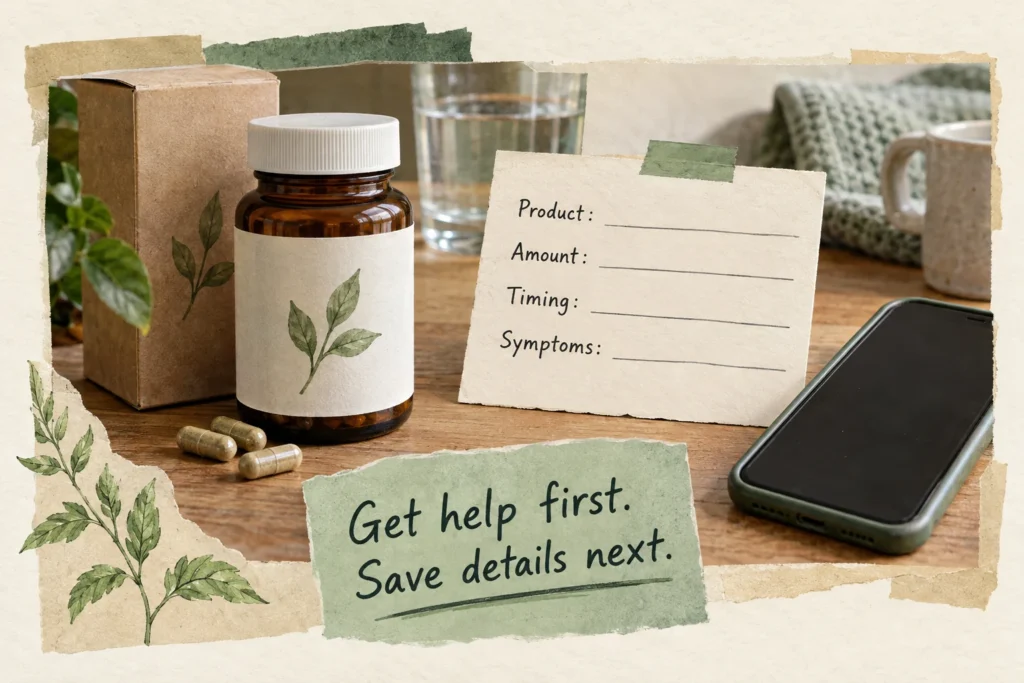
While help is en route, keep the remaining product and its packaging, and photograph all label panels, including the lot and expiration numbers. If you need to, save the actual bottle as opposed to using the shopping page as your source for a package image. Add the following:[2][8]
- · The actual amount taken: capsule/tablet count, volume/measure of liquid or powder.
- · The time of day you took it, if it varies, and if it’s different from the usual dose.
- · The time symptoms began, how it has changed, and what you have done about it.
- · Other medications and supplements including alcohol and over the counter medications, and what time you took them in relation to your symptoms.
- · Your age, approximate weight, existing health conditions and pregnancy.
Mark uncertain details as estimates. You’re giving the professional a usable record, not sitting an exam. A symptom starting after a supplement is a clue, not proof of causation; other exposures or illnesses may need investigation.[2][8]
Report the suspicion after arranging care
After arranging care, use FDA’s [How to Report a Problem with Dietary Supplements](https://www.fda.gov/food/dietary-supplements/how-report-problem-dietary-supplements) page to reach its Safety Reporting Portal. Your exposure notes can do double duty here, and missing details or uncertainty about the cause needn’t stop you from reporting. Reports can help FDA identify potentially unsafe products. They don’t establish what caused your symptom or provide treatment. If symptoms change while you’re filling out the form, getting care takes priority over finishing it.[6][7][8]
Sources and references
- National Capital Poison Center: First aid: Act fast!
- National Capital Poison Center: Help and FAQs
- National Capital Poison Center: Contact us
- National Library of Medicine: Anaphylaxis
- National Library of Medicine: Heart attack first aid
- US Food and Drug Administration: How to Report a Problem with Dietary Supplements
- US Food and Drug Administration: Dietary Supplements: Report Adverse Events to FDA
- US Food and Drug Administration: Questions and Answers Regarding Adverse Event Reporting and Recordkeeping for Dietary Supplements