

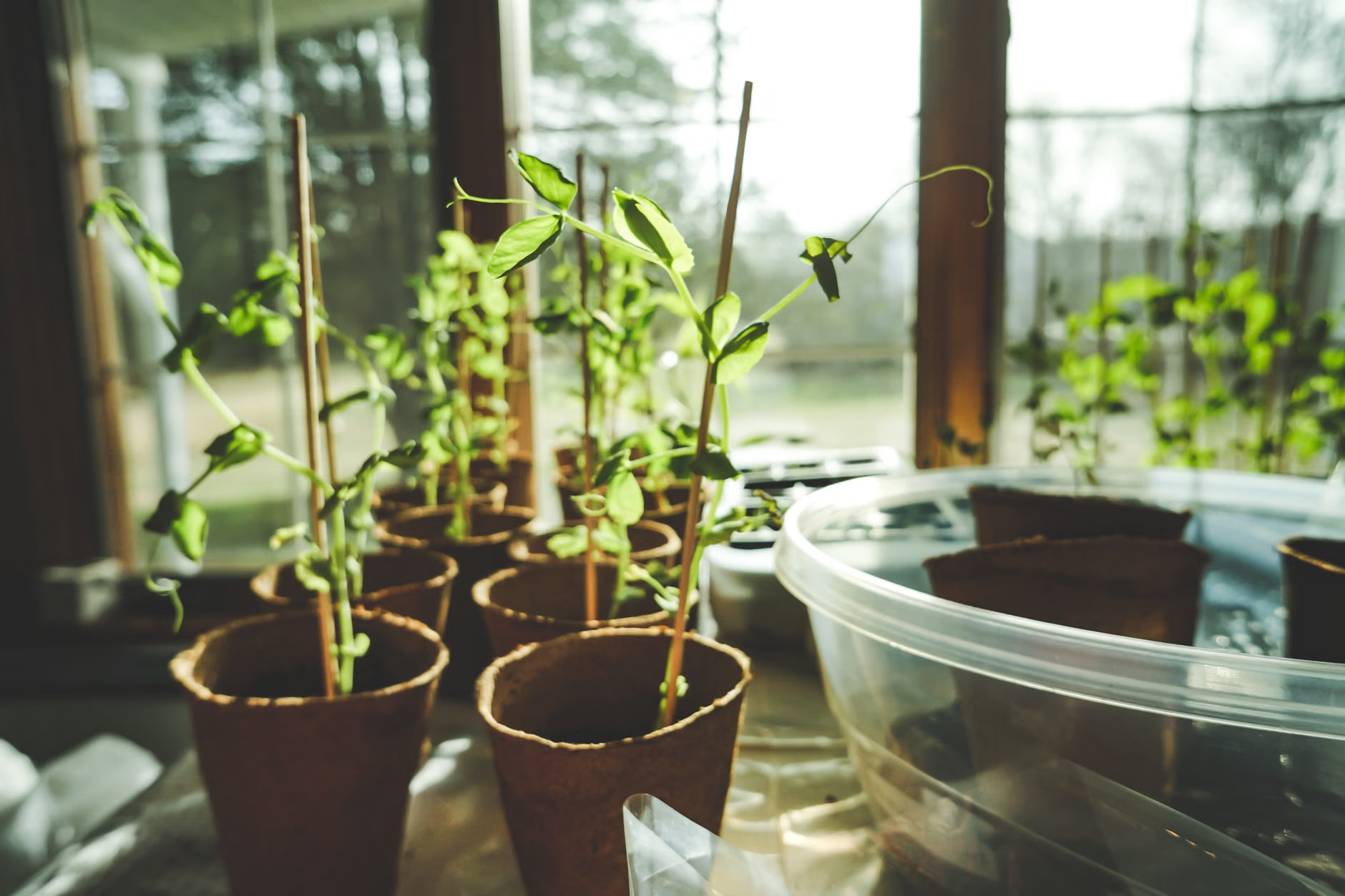
Even if your windows are south-facing, your herbs may not be getting enough light. I’d look into this first. Long stems, by themselves, don’t necessarily mean inadequate light. They may be stretching to get to light. Long stems with thin, spindly leaves may mean lack of light. More fertilizer and trimming isn’t going to help if the roots are already starving for lack of light.[1][3]
Look between the leaves, not just at the height
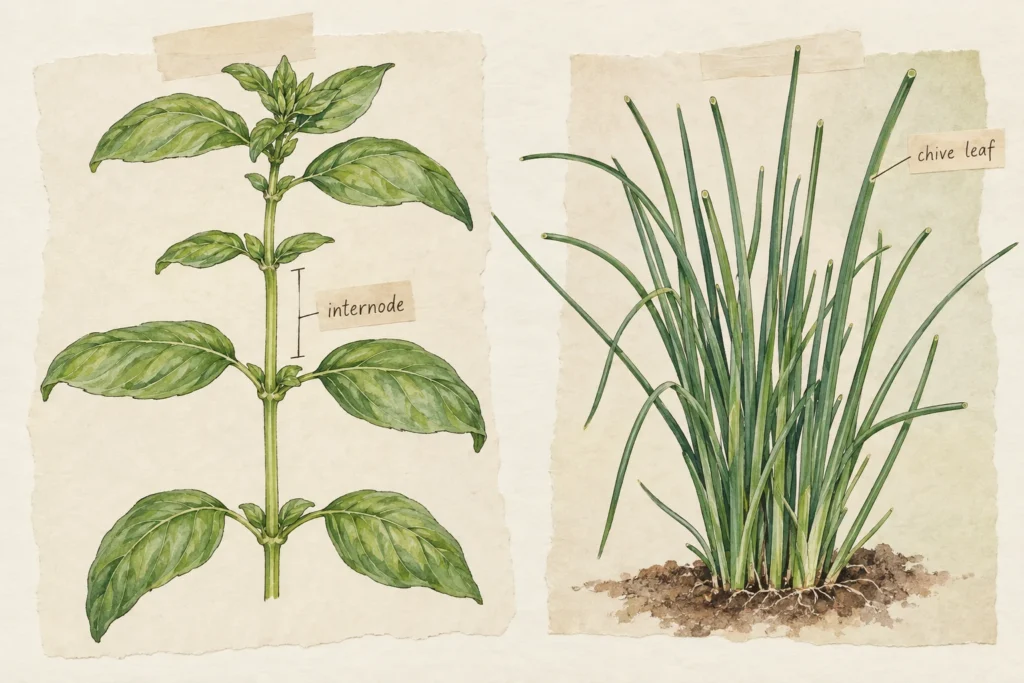
On basil, the space between pairs of leaves is called an internode. If newer growth has longer internodes with thinner stems and less leaves, and older growth is shorter with more leaves, lack of light may be the problem. However, even healthy basil has internodes of varying lengths, and height doesn’t always mean lack of light.[1][3]
Dill and chives are naturally tall and airy plants, and basil isn't immune to this problem, but comparing a chive leaf to a basil internode tells you very little. Comparing a chive leaf to a basil leaf tells you even less. A better comparison is between older and newer growth on the same plant.[4][5]
The window’s light has to reach the plant
Imagine I’m squeezing a basil pot behind a taller herb to keep the kitchen counter clear. A south-facing window means sunlight across the sink. My basil is tall and stretchy, offering mostly stems instead of leaves. I'm frustrated, but when I get to leaf level, the neighboring foliage is blocking the basil's view of the window. Poor light is probably the problem, and I'd rearrange the pots before buying more plant food.
In the US, south- and west-facing windows are useful starting points, but the compass direction doesn’t settle it. An overhang, nearby building, tree, curtain, or screen can reduce the light, and a pot set farther into the room may sit outside the direct-sun patch. Even without moving anything, winter’s shorter days and changed sun angle can leave a once-productive spot short of light.[1][2][7]
Over a few representative days, note when direct sun starts and stops touching the leaves, not the empty sill beside them. Maryland Extension recommends at least five hours of sun for indoor herbs; Minnesota recommends at least six hours of direct sunlight for most herbs. Those are broad growing targets, not a pass/fail test. The log helps you spot a short exposure, but it doesn’t measure intensity: hours of weak illumination aren’t interchangeable with hours of direct sun.[1][2][3]
Separate shading from other trouble
Spreading pots apart because of foliage overlap does not mean the roots need more space. Roots may need more space if the plant is crowded, but if it’s yellowing or wilting with consistently wet potting mix, there’s another problem. If the potting mix is consistently wet and the soil is saturated, that can damage the roots and cause weak growth. The symptoms of weak growth can be caused by many different issues and watering more does not always solve the problem.[3][8]
Also check for temperature extremes beside the glass. I wouldn't always prescribe a cold room to a plant, especially if the plant isn't showing signs of distress from it. Long stems on plants aren't always an indicator of overheating.[2]
Fix the exposure, then decide what to cut
Start with the unshaded side and photograph the growing tips for later comparison. Look for changes in spacing of leaf arrangements, and the sturdiness of the stem. Old, bare sections of stem are not going to shrink and become short. I would judge that the plant is doing something different when it produces new leaves and stems.[1][3]
Pruning can encourage branching, but it can’t supply the light those branches need. For established basil, harvesting can begin at six to eight leaves: cut just above a leaf node, where the leaves attach, and leave healthy foliage below to support continued growth. Don’t give every herb the basil treatment. Chives are harvested near the base.[5][6]
Purchasing a light would be a more reasonable next step rather than the first. The plant can be grown on a 14 hour on, 10 hour off schedule. The light should be placed so the entire canopy of the plant can be reached. The light should not be placed so it is just shining on the tip of the plant. The wattage of a light will not tell you if the light will reach the leaves.[1][7]
You don’t have to turn a small herb pot into another equipment project. If lighting is more upkeep than you want, choose a plant better matched to the exposure you observed, or grow the demanding herb only during the season when that window provides enough light. I’d rather change the mismatch than buy another identical pot for the same disappointing spot.
Sources and references
- University of Maryland Extension: Lighting for Indoor Plants (2023-03-10)
- University of Maryland Extension: Growing Herbs in Containers and Indoors (2024-03-04)
- University of Minnesota Extension: Growing herbs in home gardens
- University of Minnesota Extension: Growing dill in home gardens
- University of Maryland Extension: Chives (2024-04-29)
- Utah State University Extension: How to Grow Basil in Your Garden (2020-05)
- University of Minnesota Extension: Lighting for indoor plants and starting seeds
- University of Maine Cooperative Extension: Tips for Growing Houseplants in Maine